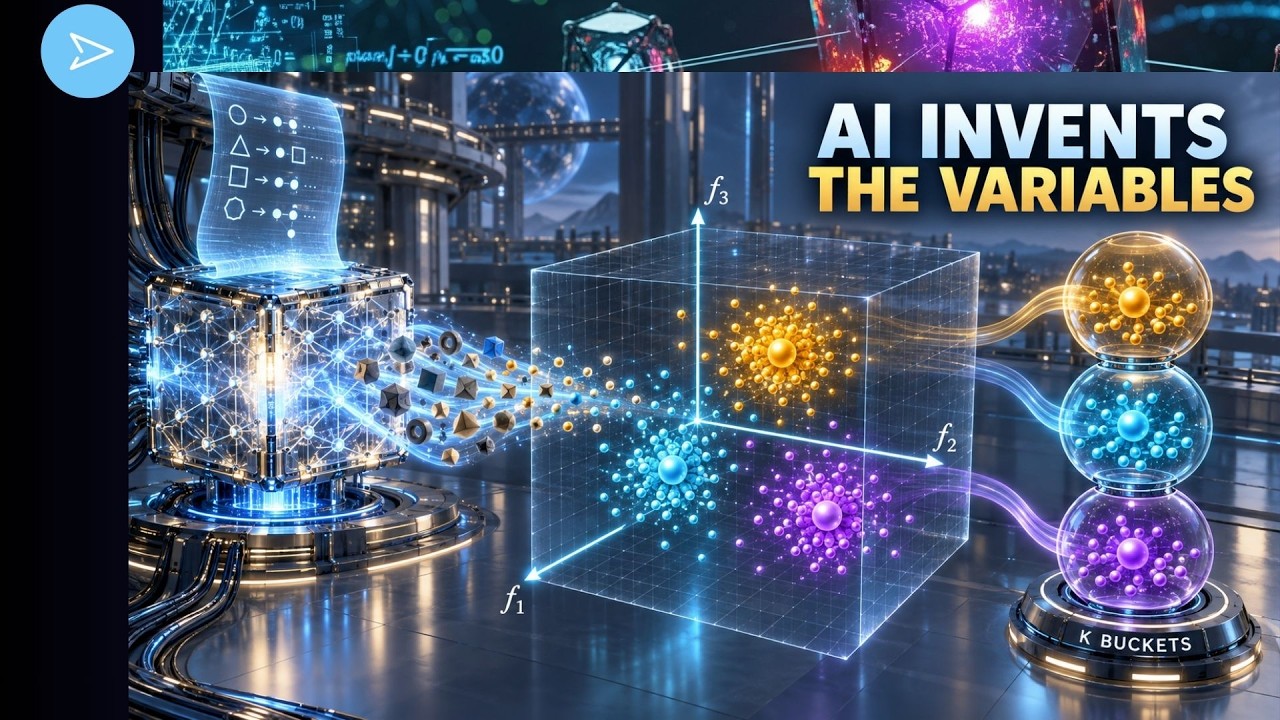
Imagine an AI that can redesign the very playground where it learns.
The Simple Version
Think of a maze. The AI finds a shortcut that lets you reach the exit with fewer steps.
How It Actually Works
Defining State Spaces
The system treats each possible situation as a node in a graph.
Optimization Process
It rewires connections to lower the total distance, using a reward function that penalizes unnecessary moves.
Technical Deep Dive
The agent uses a graph neural network to encode states and a policy network to propose abstractions.
Training minimizes a loss that combines reconstruction error and downstream task performance.
Implementation leverages PyTorch and custom CUDA kernels for efficiency.
Why This Matters
Better state spaces mean LLMs can solve complex tasks with less compute, lowering costs and energy use.
Researchers can transfer the method to robotics, planning, and scientific discovery.
Early results show up to 30% speedup on reasoning benchmarks.
Key Takeaways
- AI can reshape its own learning environment.
- Optimized state spaces cut reasoning steps dramatically.
- Graph‑based abstraction is compatible with existing LLM pipelines.
- Potential to slash compute requirements by up to 30%.
- Scalable across domains like planning, simulation, and education.