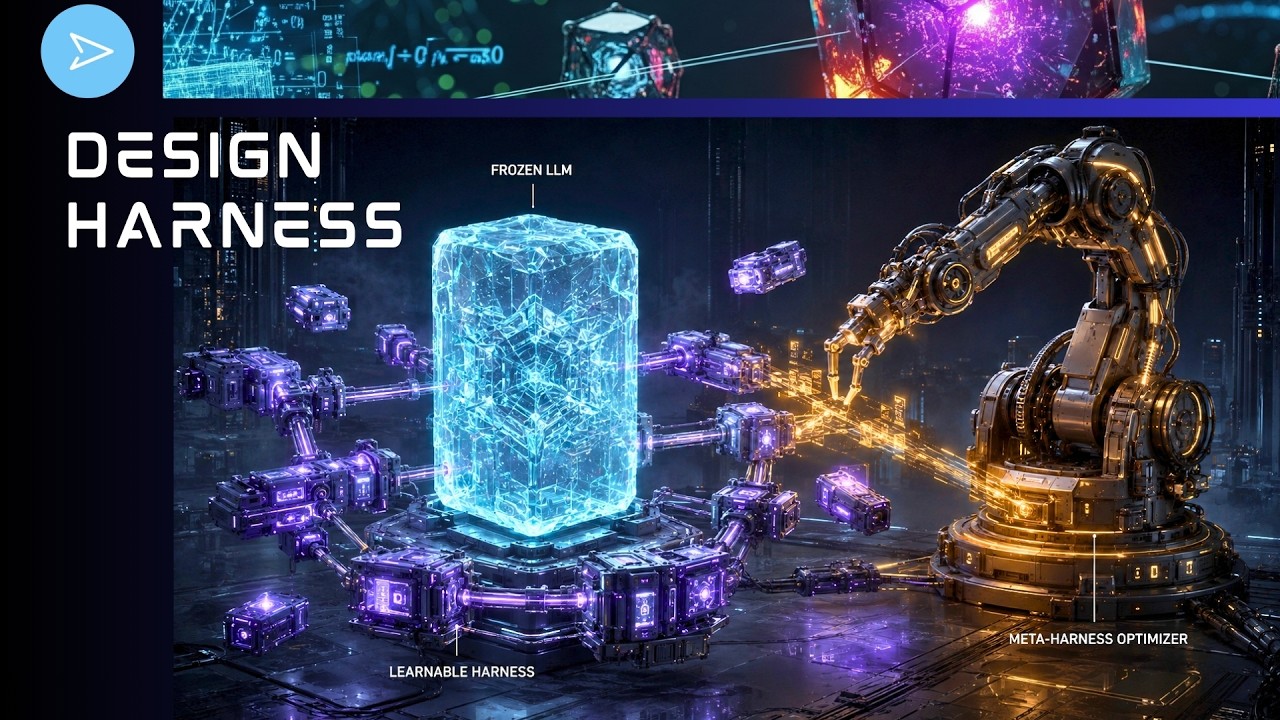
What if an AI could reshape how a frozen LLM creates visual reports—without touching its weights?
The Simple Version
Think of the LLM as a powerful engine that stays locked. AutoDesign doesn’t rebuild the engine; it tweaks the control panel that tells it what to draw.
How It Actually Works
Preference Encoding
Human feedback is turned into numeric scores that guide the search.
Harness Mutation
The system swaps out small parts of the output pipeline—like layout scripts—to see what fits best.
Fitness Evaluation
Each mutated harness is run, and the resulting visual output is scored against the original preference.
Technical Deep Dive
AutoDesign treats the harness as a sequence of transformation modules that can be recombined.
It uses a meta‑optimizer that treats each module configuration as a chromosome, applying crossover and mutation operators.
The optimizer runs a lightweight evolutionary loop, keeping only the top‑scoring harnesses for the next generation.
Why This Matters
Researchers can now automate the creation of polished reports, slides, or dashboards without hiring designers.
Because the LLM itself never changes, the approach stays compatible with any frozen model, from open‑source to proprietary.
Enterprises gain a fast, low‑cost way to generate consistent visual storytelling across teams.
Key Takeaways
- AutoDesign evolves output pipelines, not model weights.
- Human preferences become executable evaluation functions.
- Evolutionary search discovers effective harness configurations.
- No retraining means fast deployment across any LLM.
- It opens the door to AI‑assisted design at scale.