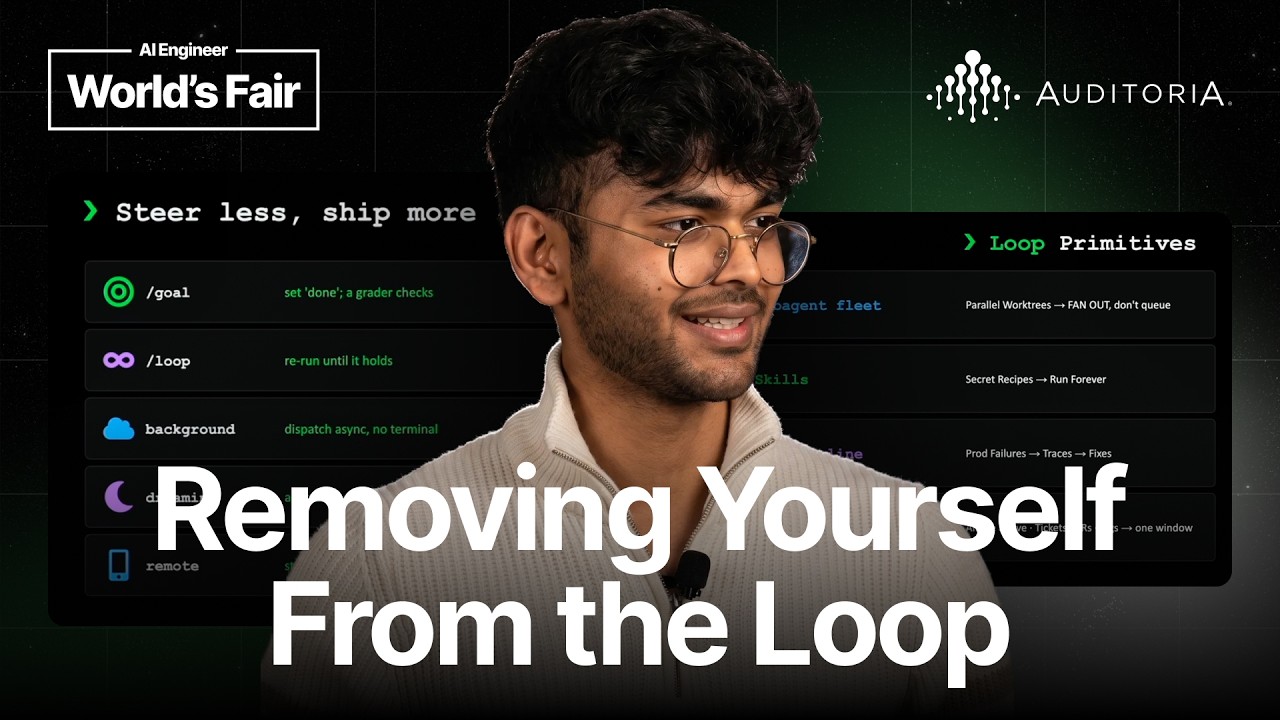
Ever feel like you're the bottleneck in shipping AI agents? The real slowdown isn’t the model or the GPUs—it’s you.
The Simple Version
Think of a coding agent as a tireless teammate that handles repetitive dev chores. It can take a bug report, write tests, and push code—all without you typing a single line.
How It Actually Works
Agent Architecture
Agents are chained: a primary agent delegates tasks to sub‑agents.
Task Sources
Work items come from existing tickets, QA reports, GitHub PRs, and logs. Sub‑agents fetch these and decide which pattern to apply.
Technical Deep Dive
Each agent runs in its own git worktree, enabling parallel execution. Skills modules encode best‑practice patterns, ensuring consistent code style and security.
Trace collection captures model decisions, while a verification sub‑agent writes and runs end‑to‑end tests, builds artifacts, and summarizes results.
Developers intervene only to provide context for ambiguous steps, then let the agents continue.
Why This Matters
Finance teams can deploy agents that talk to each other, reconciling data sources automatically. Instead of manually reconciling spreadsheets, you spend time reviewing outputs, dramatically reducing grunt work.
For any engineering org, this shifts the bottleneck from compute power to human oversight, freeing talent for higher‑value design.
Key Takeaways
- Developers are often the slowest part of AI‑driven shipping.
- Agents can run in parallel across isolated git worktrees.
- Sub‑agents extract tasks from tickets, logs, and PRs.
- Pattern‑based skills keep code consistent and safe.
- Human verification stays lightweight and focused.
- Finance use‑cases illustrate agent‑to‑agent workflows.
- Scaling agents multiplies output without extra compute.