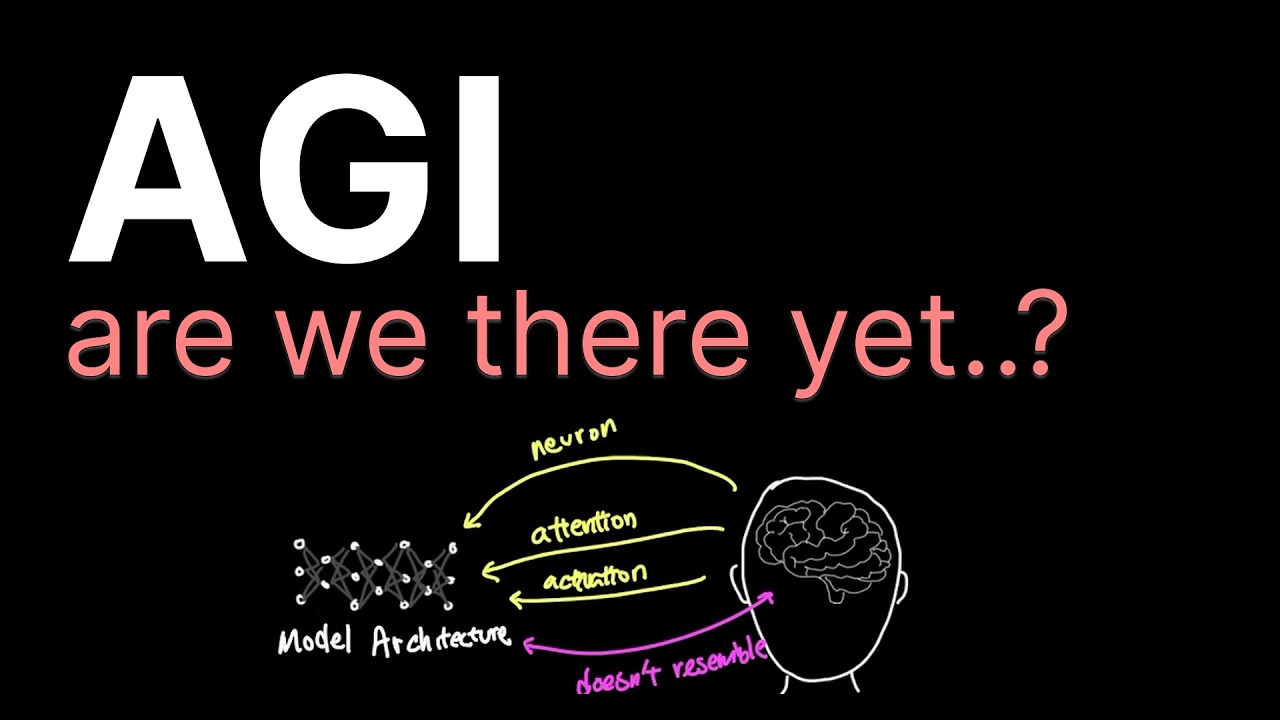
Ever wonder if we’ve already crossed the AGI finish line?
The Simple Version
Think of AGI as a car that can drive anywhere, not just on a single road.
How It Actually Works
Framework
It looks at reasoning depth, memory, and adaptability.
Criticisms
They point to narrow tasks and lack of true understanding.
Mechanism
The model uses massive parameters, self‑supervised learning, and multi‑modal inputs.
Technical Deep Dive
Jensen Huang’s comment references the OpenAI GPT‑6 Astra prototype, which reportedly uses a 1‑trillion‑parameter architecture with sparse mixture‑of‑experts routing.
Such models separate reasoning, perception, and planning modules, enabling emergent capabilities like code generation, scientific inference, and real‑time simulation.
From a development standpoint, this means investing in distributed training clusters, custom kernel libraries, and continual fine‑tuning pipelines to stay competitive.
Why This Matters
When investors talk about “AGI”, they’re really betting on the next wave of AI‑driven products that can automate complex jobs.
For developers, crossing the AGI threshold could reshape software architecture — think autonomous agents that design, test, and deploy code.
Understanding the signs now helps you prepare your skill stack for a future where AI teammates are commonplace.
Key Takeaways
- AGI is defined by flexible, cross‑domain reasoning, not just raw accuracy.
- Current hype around GPT‑6 Astra hints at early AGI‑like traits.
- Investments are tying funding to milestones like multi‑modal mastery.
- Developers should focus on system design that can plug in new AI modules.
- Watch for “reasoning depth” metrics as early AGI indicators.
- Scaling laws still guide how quickly capabilities grow.
- Regulatory and ethical discussions will shape the AGI rollout.