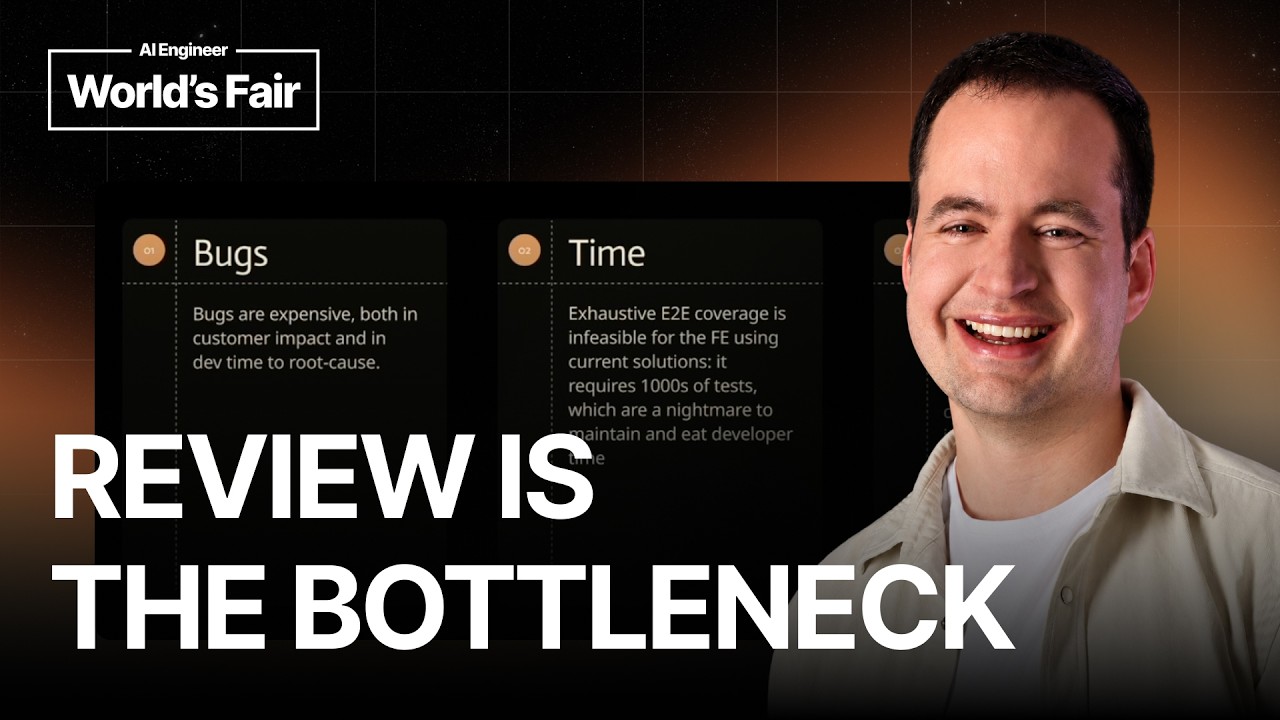
You've likely felt it: AI can generate a complex feature in seconds, but you still spend hours manually clicking through the app to make sure it didn't break something obscure in a different module.
The Simple Version
Traditional software testing is like using a checklist. You tell the computer, "Check if the login button is blue" or "Check if the user is redirected to the dashboard." If the checklist passes, you're happy.
The problem is that as AI writes code faster, the number of things that could possibly break grows exponentially. You can't possibly write a checklist long enough to cover every edge case, permission level, and feature flag combination.
Meticulous flips the script. Instead of a checklist, it's like a high-fidelity "spot the difference" game. It records exactly what users did in the past, replays those actions on your new code, and shows you exactly what changed visually.
How It Actually Works
Meticulous doesn't require developers to write test scripts. Instead, it integrates into the existing workflow through a few key stages.
1. Recording in Non-Production
The process starts with a single line of JavaScript injected into non-production environments, such as localhost, QA, dev, or staging. This script instruments the browser to record thousands of real user workflows—like clicking a settings panel or an analytics dashboard.
2. Replaying on the PR
When an engineer opens a pull request, the CI runner spins up the application on localhost:3000. Meticulous then selects a subset of those recorded workflows and replays them by dispatching events one by one.
3. Visual Diffing
As the events replay, Meticulous takes a screenshot at every atomic moment. It compares the "before" sequence (from the main branch) with the "after" sequence (from the PR). As Gabriel Spencer-Harper puts it, "Meticulous will not tell you whether or not there's a bug. What it will show you is a set of diffs that show you what's different."
Technical Deep Dive
To make this work at scale for companies like Discord, Notion, and Dropbox, Meticulous has to solve the three biggest enemies of automated testing: non-determinism, network instability, and coverage gaps.
The Deterministic Browser
Most browser-based tests (like those in Cypress or Playwright) are "flaky" because browsers are inherently non-deterministic. Timing issues, CPU clock speed, and the interleaving of setTimeout and setInterval can cause a test to fail randomly.
Meticulous augments the browser from the scheduling engine layer up to force determinism. By controlling the clock and the execution order, they ensure that the same set of inputs always produces the exact same visual output, virtually eliminating flakes.
Network Mocking and Idempotency
To ensure tests are idempotent (meaning they produce the same result every time they run), Meticulous records all network requests and responses during the recording phase. At replay time, these are stubbed in.
This isolation prevents race conditions and allows the system to parallelize tests horizontally. This is why they can process thousands of flows and return results in a few minutes rather than hours.
Coverage-Guided Flow Selection
Recording every single user action would create too much noise. To solve this, Meticulous uses a mapping algorithm. They replay flows against the main branch and monitor which lines of code are executed.
They then build an index mapping workflows to code lines and select the smallest subset of flows that maximizes total code coverage. This ensures that almost every branch of the logic is exercised without replaying redundant actions.
Why This Matters
For a long time, the bottleneck in shipping software was writing the code. AI has effectively solved that; as Spencer-Harper notes, "AI writes code faster than humans can review it." Now, the bottleneck has shifted to verification.
When verification is slow, teams face a dangerous trade-off: they either ship slowly to remain safe or ship quickly and accept a higher rate of regressions. By automating the "spot the difference" process, developers can perform sweeping refactors or bump all their dependencies with total confidence.
This changes the fundamental meaning of code coverage. In traditional testing, a test can cover 100% of the code but have a weak assertion that misses the bug. In this model, because every single pixel is verified at every step, "code covered is not the same as code tested" is no longer a limitation—coverage effectively equals verification.