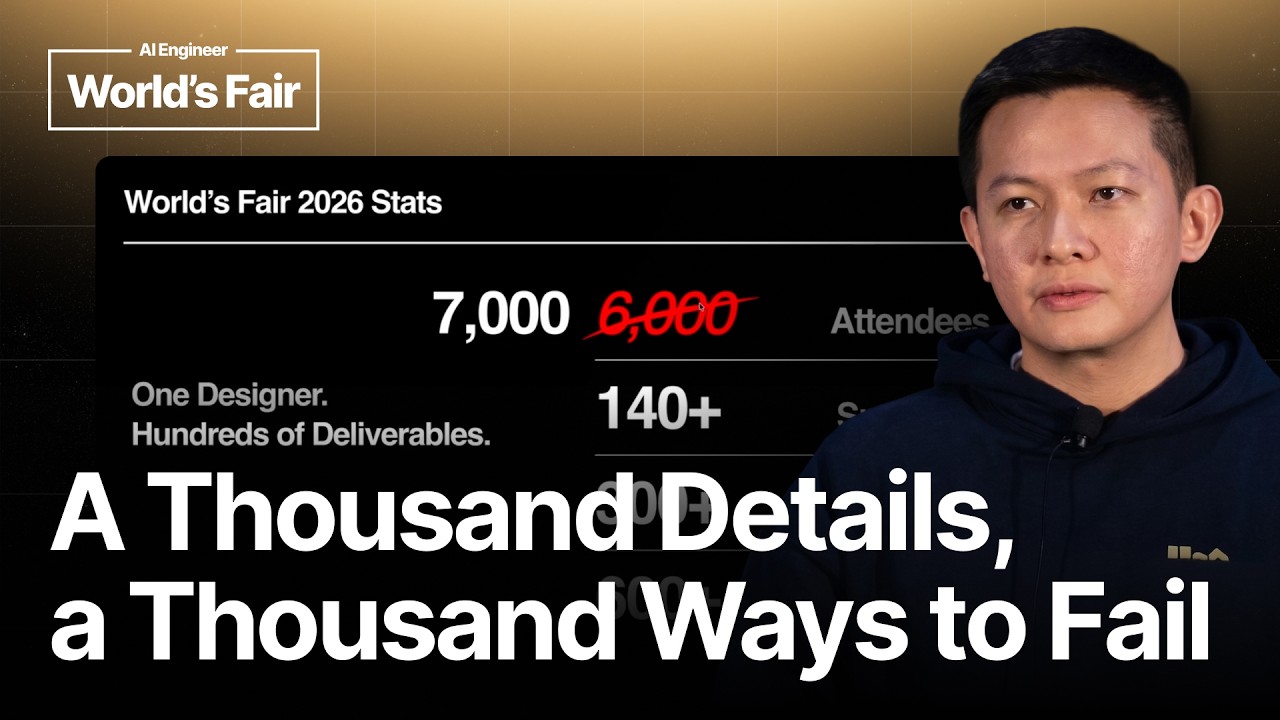
Imagine a single designer handling logos for 140 sponsors, signage for 7,000 attendees, and hundreds of speaker graphics — all without missing a beat.
The Simple Version
Wendy builds a tight design system, makes assets reusable, and lets AI fill the gaps.
How It Actually Works
Foundation First
The system locks font sizes and colors so AI cannot drift.
Reusable Designs
Components are stored once and pulled many times.
Automated Workflows
Live data flows from Figma to screens on a flash drive.
Validate the Output
AI checks sponsor logos for missing pieces.
Remove Friction
Exceptions get a quick edit button in Slack.
Technical Deep Dive
Wendy’s pipeline pulls live Figma data, exports to PNG, and drops it on display devices.
Devin, a Slack‑native AI, matches speaker photos to the correct slot and adds edit controls on demand.
All assets are generated with a custom script that injects headshots, names, and session titles into a template.
The design system uses CSS variables and a JSON manifest, preventing the model from inventing new spacing.
Why This Matters
Scaling design for thousands of attendees shows how AI can turn a bottleneck into a competitive edge.
Teams can now focus on creative strategy while AI handles repetitive pixel‑perfect work.
This approach reduces burnout and speeds up launch timelines for large‑scale events.
Key Takeaways
- Lock design parameters to keep AI predictable.
- Make components reusable to avoid reinventing the wheel.
- Automate data flow from design tools to production.
- Use AI for quality checks on massive asset lists.
- Provide instant edit hooks in communication platforms.
- Free human creatives to focus on high‑level storytelling.
- Scale becomes a strength, not a constraint, when tools are no longer limiting.