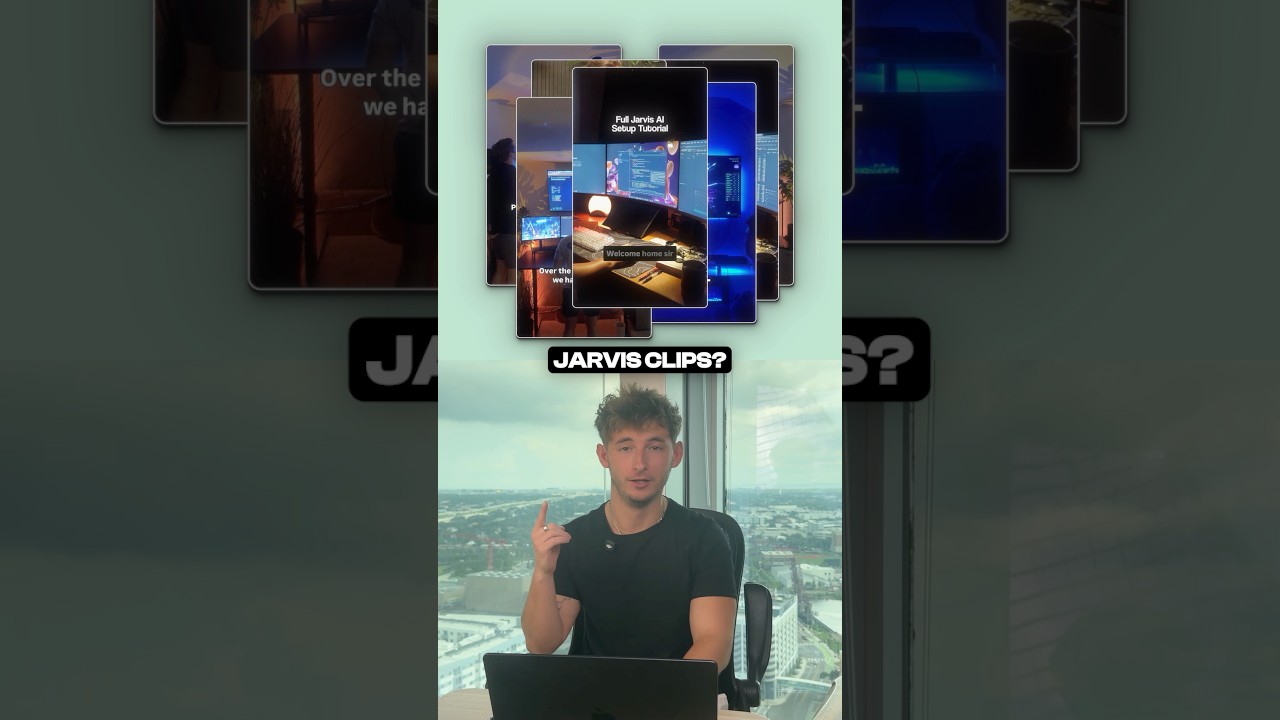
Stop thinking of AI as a fancy search box and start thinking of it as a digital employee.
We've all used ChatGPT, but the real magic happens when the AI stops talking and starts doing.
The Simple Version
Most people use AI like a smart encyclopedia; you ask a question, and it gives you a text answer. A JARVIS-style system is different because it has agency.
It doesn't just tell you how to book a flight; it actually logs into the site, finds the cheapest ticket, and puts it on your calendar.
How It Actually Works
To build a JARVIS, you need more than just a prompt. You need a system that connects a 'brain' to 'hands'.
The Brain (The LLM)
The Large Language Model (like GPT-4 or Claude) acts as the reasoning engine. It analyzes your request and decides which action needs to be taken to achieve the goal.
The Hands (Tools & APIs)
The AI doesn't 'click' buttons like a human. Instead, it uses APIs (Application Programming Interfaces) to talk to other software, like Gmail, Slack, or Shopify.
The Memory (Context)
A true assistant needs to remember who you are and how you like things. This is done using Vector Databases, which allow the AI to retrieve your specific preferences in milliseconds.
Technical Deep Dive
For the developers, the secret sauce of a JARVIS system is Function Calling. Instead of returning a sentence, the LLM returns a structured JSON object that matches a specific function signature in your code.
This is often managed via an Agentic Workflow. The AI follows a 'Reason-Act' (ReAct) loop: it thinks about the goal, takes an action, observes the result, and repeats until the task is complete.
Modern stacks for this usually involve orchestration frameworks like LangChain or CrewAI, combined with automation platforms like Make.com or Zapier to handle the API plumbing.
Why This Matters
We are shifting from the era of 'Prompt Engineering' to the era of 'Agent Orchestration'. The value is no longer in knowing how to ask a question, but in knowing how to build a system that executes a workflow.
This removes the 'manual middleman'. Instead of copying and pasting data between five different apps, your AI agent handles the entire pipeline while you sleep.
Key Takeaways
- Chatbots answer; Agents execute.
- LLMs provide the reasoning, while APIs provide the capability.
- Function Calling allows AI to output structured data for software to use.
- Memory is achieved through vector databases (RAG) for personalized context.
- ReAct loops enable the AI to self-correct and iterate on a task.
- Orchestration is the process of linking multiple AI agents together for complex goals.