Ever ask the same question twice and get wildly different answers from an AI? That’s not a glitch—it’s a chance to sharpen your system.
The Simple Version
Think of an AI agent like a detective who sometimes reaches opposite conclusions on the same case. Those opposite conclusions usually happen when the clues are fuzzy, not because the detective is broken.
How It Actually Works
When an agent runs the same task twice, the model may land on different sides of a thin boundary where policies overlap.
Gray‑Zone Detection
Disagreement flags examples that sit close to the edge of the model’s confidence.
Active Learning Loop
The system automatically selects those ambiguous cases for human review, ensuring effort goes where it matters most.
Memory Integration
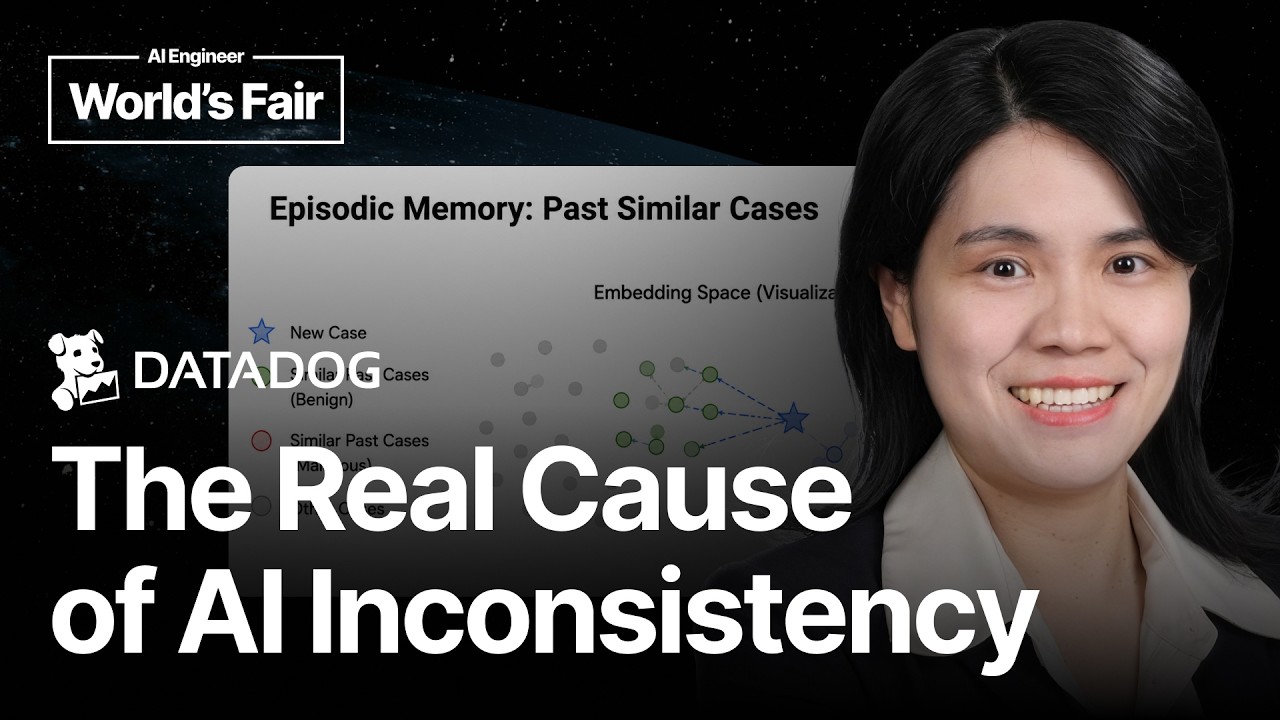
Semantic memory stores domain policies; episodic memory recalls past similar decisions, helping the agent align with real‑world expectations.
Technical Deep Dive
Use a similarity search over embeddings to cluster outputs that differ materially. Then apply a rule‑based filter to isolate cases where confidence intervals overlap but final labels diverge.
In code, you can implement this with a simple Python snippet:
def detect_gray_zone(outputs):
{
    # outputs is a list of dicts with 'text' and 'confidence'
    differences = [abs(o1['confidence'] - o2['confidence']) for o1, o2 in zip(outputs[0], outputs[1])]
    return [i for i, d in enumerate(differences) if d < 0.15]
}
Combine the flagged indices with a human‑in‑the‑loop UI that highlights the divergent answers for quick annotation.
Why This Matters
In cybersecurity, a flip‑flop between “malicious” and “benign” can trigger false alarms or missed threats, eroding trust.
By treating inconsistency as data, teams can build agents that learn from each human correction, reducing the need for expensive fine‑tuning while staying aligned with evolving business policies.
Key Takeaways
- Disagreement often signals ambiguous policy zones, not model failure.
- Use active learning to prioritize human review on those ambiguous cases.
- Leverage semantic memory for domain rules and episodic memory for past outcomes.
- Build a continuous loop that updates the agent without full retraining.
- Clarify policies each time a flip‑flop is resolved, making the agent more consistent.