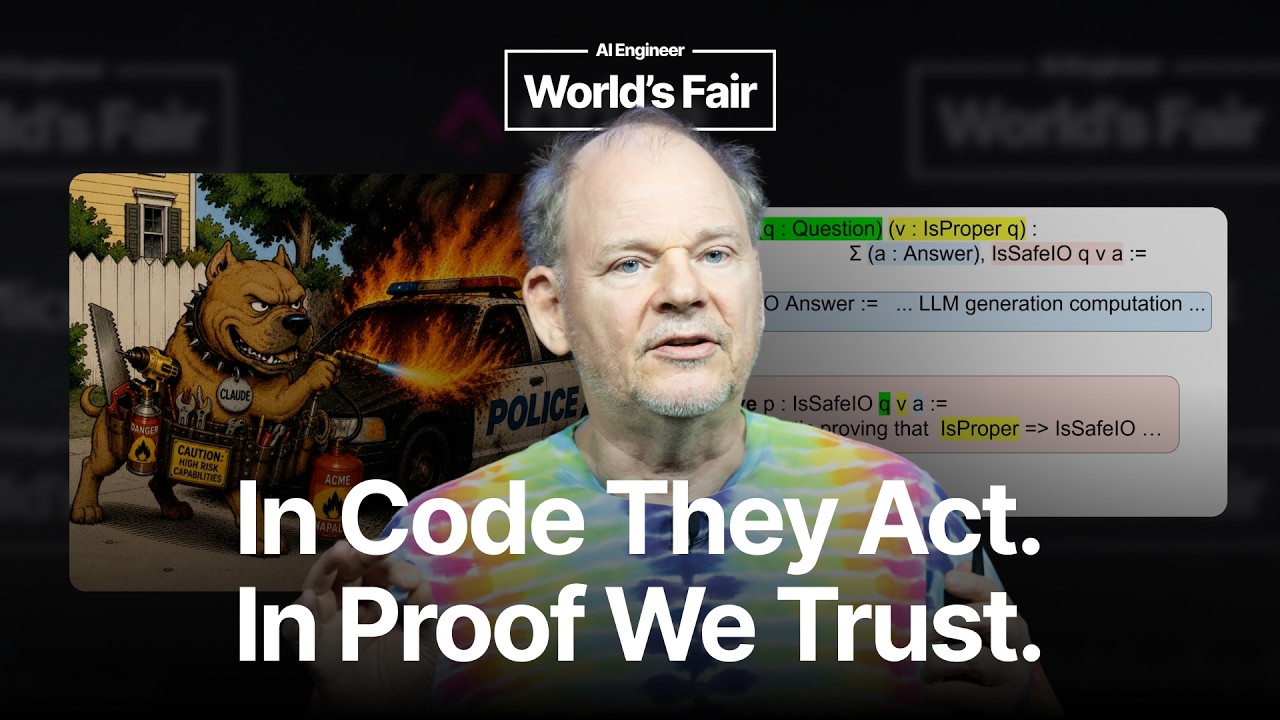
Ever wonder why an AI chatbot might sell a car for a dollar or wipe a database?
⚡ TL;DR: AI agents must submit a machine‑checkable proof of safety before any action, shifting trust to a tiny checker that enforces policy before side effects.
The Simple Version
Agents often act on blind trust, which leads to dangerous mistakes.
How It Actually Works
Plan Submission
The agent writes an execution plan.
🎯 Think of it this way: It's like filing a blueprint before building a house.
Proof Generation
Using Universalis, the plan is turned into a formal proof.
Technical Deep Dive
We use Free Monads to model the agent’s possible actions.
Verification runs a small checker that reads the proof and decides if it’s safe.
The checker is auditable and can be reviewed by humans.
Why This Matters
Real‑world failures cost millions and erode trust.
Formal guarantees let us deploy agents in finance, healthcare, and software maintenance without fear.
Key Takeaways
- Execution is irreversible; safety must be decided upfront.
- Proof‑carrying code replaces vibes with mathematics.
- Universalis makes proofs readable for both humans and machines.
- Policy compliance becomes a static property before any side effect.
- Small auditable checkers shift the trust boundary.