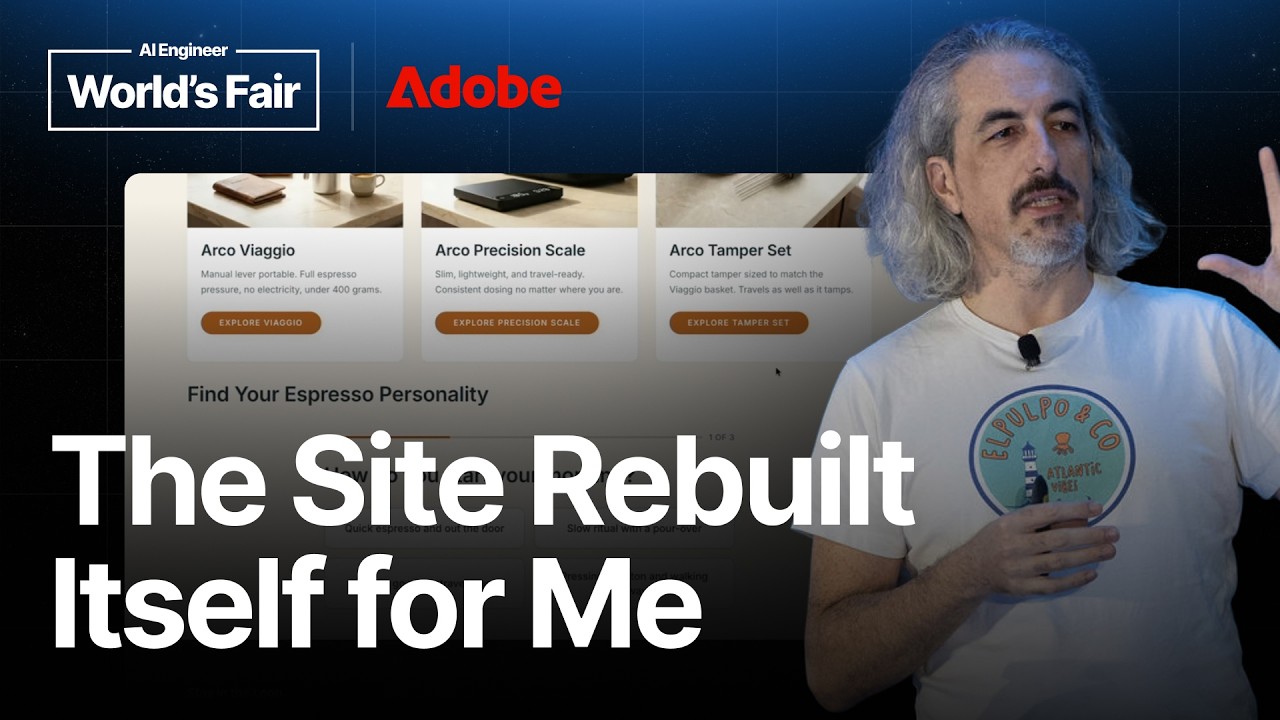
Ever typed a tiny request and watched a whole webpage appear in seconds, tailored just for you? That’s the magic behind Adobe’s new Agentic Sites.
The Simple Version
Think of a website like a Lego set. Instead of rebuilding the whole model each time, you pick the right bricks and snap them together for each visitor.
How It Actually Works
Grounding in the Site
The AI never starts from scratch. It pulls from the existing brand corpus, so every generated line stays on‑brand.
Block‑Level Generation
Only a few blocks change per request — hero image, copy, calls‑to‑action — while the rest stays static, keeping latency low.
Technical Deep Dive
Model selection is treated as a per‑site experiment. Adobe runs multiple LLMs through a speed‑accuracy grid and picks the fastest that meets brand rules.
Evaluation metrics include both factual correctness and response time; a page taking more than a few seconds loses users.
Retrieval‑augmented generation fetches relevant snippets from the site’s own style guide, then feeds them to the chosen model for minimal hallucination.
Why This Matters
Marketers have chased “audience of one” for decades, but cost and speed made it impossible — until now.
Agentic Sites let brands deliver ultra‑personalized experiences without hiring armies of developers or waiting for expensive frontier models.
Because the system can pre‑generate and cache pages, it scales to millions of unique URLs while staying under two seconds.
Key Takeaways
- Only selected blocks are regenerated; the rest of the page stays cached.
- Speed is a first‑class metric — pages must load in ~1 second.
- Brand rules act as a strict retrieval filter to prevent hallucinations.
- Different LLMs are evaluated per site for the best trade‑off of accuracy and latency.
- Any URL can be turned into an agentic site with a simple configuration step.
- Personalization is driven by personas defined by marketers, not by generic user data.
- The approach makes “audience of one” affordable for real‑world businesses.