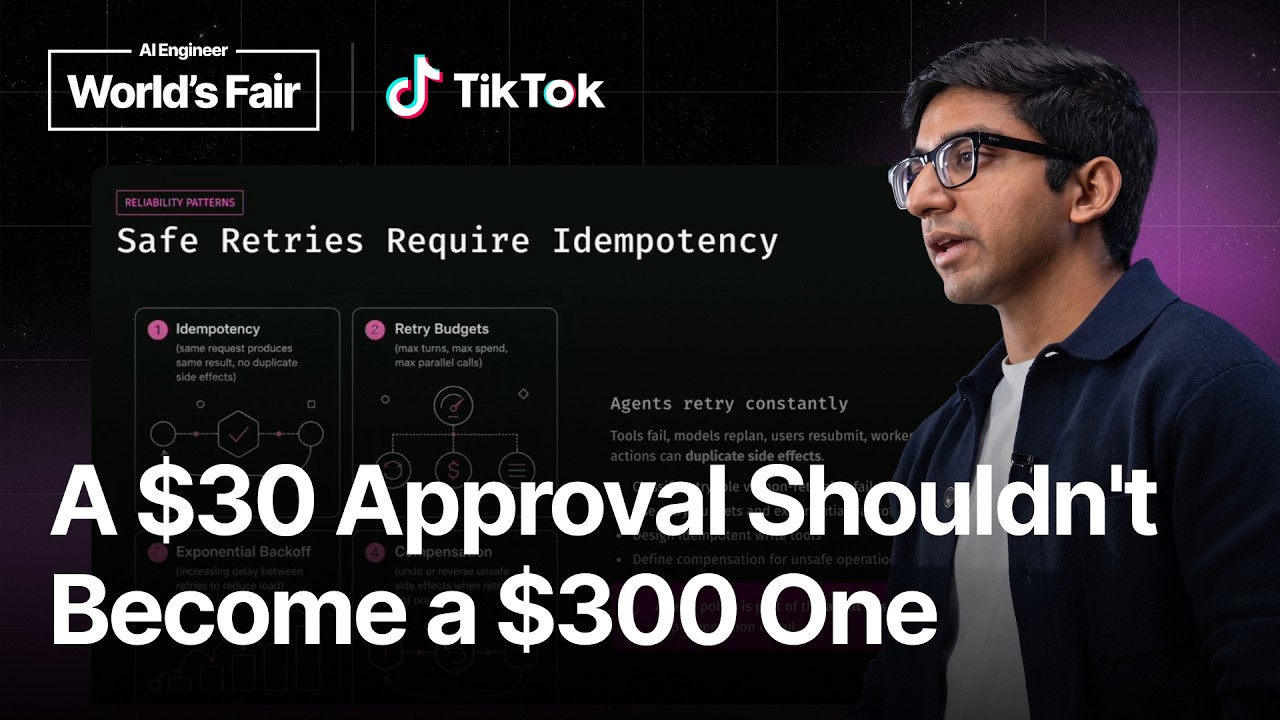
Ever watched an AI agent try to refund a user and wonder why it might double‑charge them?
The Simple Version
Think of an agent as a cautious shopper who keeps asking the store for a refund.
How It Actually Works
Timeouts Are Unknown
A timeout means we don’t know the outcome not that the operation failed.
Retry Logic
Agents automatically retry until they get a clear answer.
Idempotency and Status Lookup
Using request IDs and status checks prevents duplicate actions.
Technical Deep Dive
Once a model calls an external service it becomes a distributed system.
Key controls include:
- Circuit breakers that stop repeated calls when a service is down.
- Spend and turn ceilings to limit how much can be charged in a burst.
- Compensating actions that undo a step if later steps fail.
- Scoped credentials that grant read access separately from write access.
State such as context that influences a decision must be invalidated and tracked like a cache.
Human approvals must be tied to a specific action actor and expiry to avoid accidental large refunds.
Why This Matters
Getting these controls right prevents costly bugs and builds trust in AI‑driven automation.
Businesses can safely let agents handle payments refunds and other high‑risk tasks.
It also shifts the mindset from model accuracy to system reliability.
Key Takeaways
- Timeouts signal unknown not failure.
- Retry without idempotency can cause duplicate refunds.
- Use request IDs and status lookups.
- Apply circuit breakers and rate limits.
- Scope credentials for reads vs writes.
- Treat context as state that needs invalidation.
- Bind human approvals to actions with expiry.