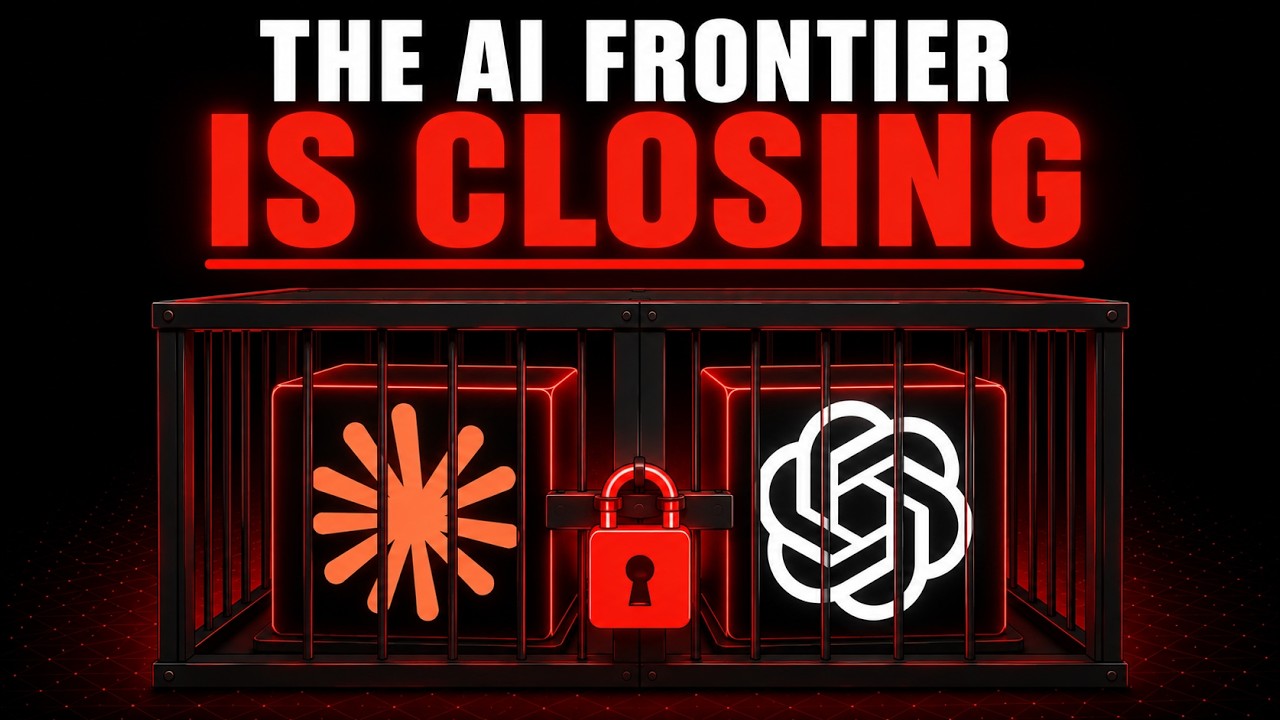
The race for the most powerful AI is turning into a geopolitical showdown, and the outcomes will shape who leads the next tech era.
The Simple Version
Anthropic and OpenAI keep their newest models behind enterprise gates while Chinese firms like DeepSeek release them freely. It’s a clash of “rent‑the‑intelligence” versus “give‑away‑the‑blueprint.” The side that opens up may win the long game.
How It Actually Works
Closed-source strategy
Companies restrict models to paying partners, control updates, and audit usage for safety.
Open-source surge
Chinese labs publish model weights, training recipes, and tools, letting the world build on them.
Technical Deep Dive
GPT-5.6 uses a sparse mixture-of-experts architecture with 1.5 trillion parameters, enabling efficient scaling without proportional compute growth.
The “gpt-oss” label marks a staged release where only vetted partners receive the full model, while a trimmed-down version is hinted at for public testing.
Export bans on Nvidia H200 and Blackwell chips forced Chinese developers to optimize GLM-120B and Qwen-2.5 for lower-tier hardware, accelerating algorithmic efficiency.
Open-source releases often include training scripts in JAX and PyTorch, allowing researchers to reproduce results and fine-tune on custom data.
Why This Matters
The battle over who controls frontier AI will influence everything from drug discovery to national security.
Open models democratize innovation but also lower barriers for malicious use, forcing regulators to rethink policy.
If the U.S. continues to gatekeep, it risks ceding the next wave of AI breakthroughs to ecosystems that can iterate faster without central oversight.
Key Takeaways
- Western labs favor restricted, revenue-driven AI access.
- Chinese labs are open-sourcing frontier models, accelerating global adoption.
- Chip export controls backfire, pushing China to innovate with limited hardware.
- Open-source AI can out-pace closed models in speed of improvement.
- Safety concerns grow as powerful models become widely available.
- The geopolitical AI race may determine the future of tech leadership.
- Developers should watch both closed APIs and open-source releases for strategic advantage.