Curious how an AI can actually book your next vacation?
The Simple Version
Building an AI agent is like assembling a bike: the LLM is the rider, the data is the map, the tools are the gears, and the coordination is the handlebars.
How It Actually Works
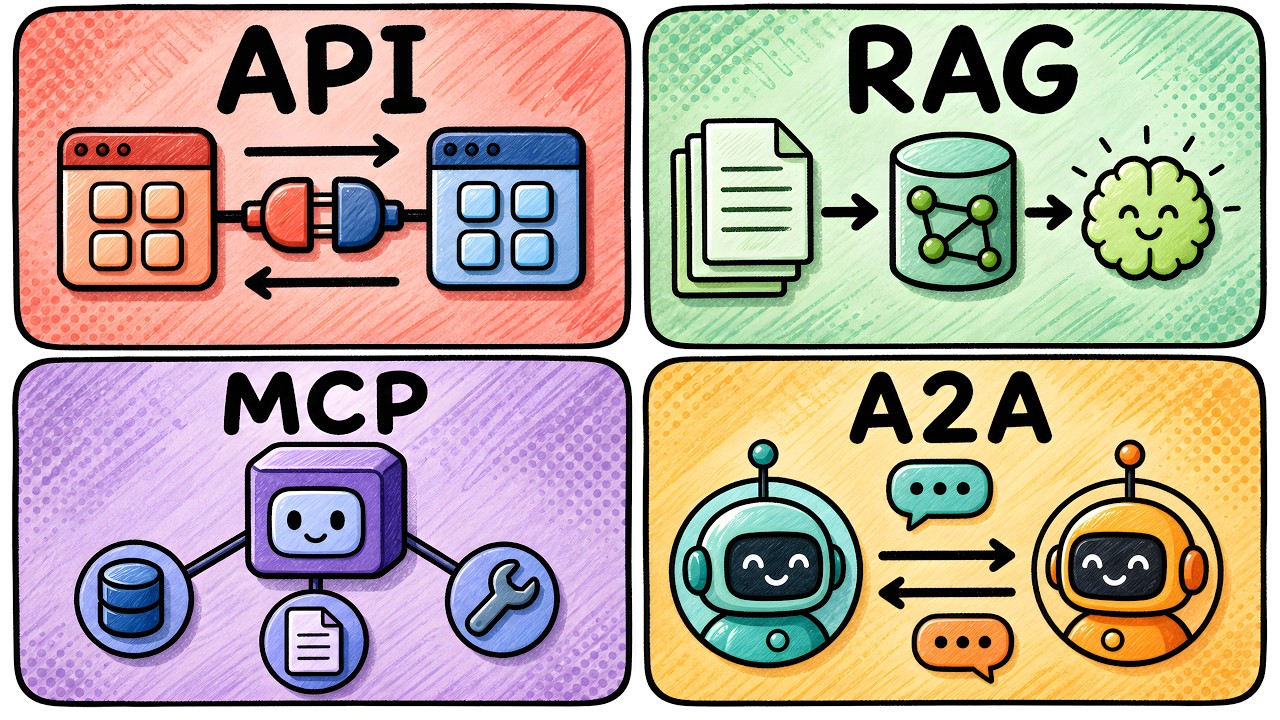
APIs: The predictable back‑end
RAG: Fresh, authorized knowledge
MCP: Connecting to external tools
A2A: Agent‑to‑agent collaboration
Technical Deep Dive
API contracts
Developers expose REST or GraphQL endpoints with clear schemas so the LLM can call them reliably.
RAG pipelines
Retrieval fetches relevant documents, then augmentation injects them into the prompt before generation.
MCP client code
Using a typed client, the agent sends a tool request, receives a typed response, and validates the output.
Why This Matters
Production agents must combine knowledge, tool access, and coordination to stay trustworthy.
Without proper permissions and validation, an agent could misuse data or expose users to risk.
Understanding these layers helps engineers design agents that scale securely.
Key Takeaways
- APIs provide stable service interfaces.
- RAG supplies up‑to‑date, authorized context.
- MCP exposes reusable external tools.
- A2A enables multi‑agent teamwork.
- Security, consent, and validation remain essential.