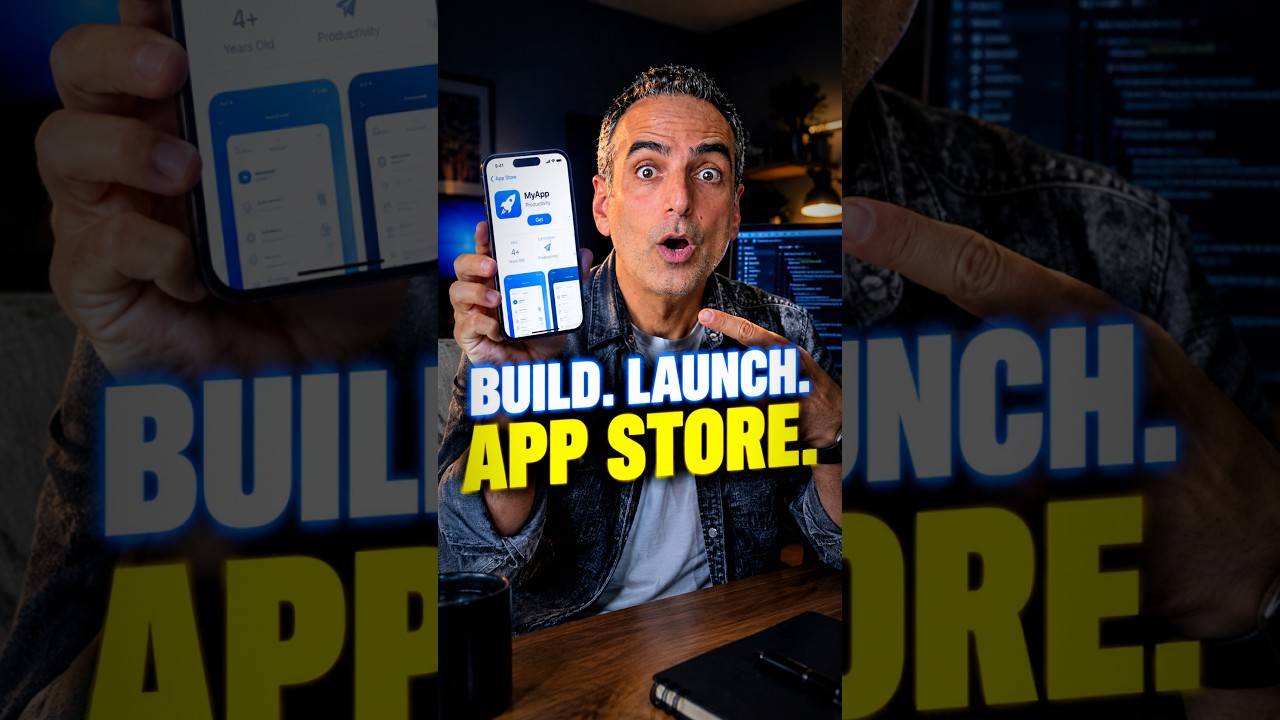
Building a mobile app used to require a massive team of developers, designers, and a lot of luck to survive Apple's review process. Now, a new wave of AI tools is changing the math, making the journey from idea to App Store much shorter.
The Simple Version
Imagine you want to open a physical bakery. Most AI tools today are like general contractors who can build a house, a shed, or a skyscraper, but they don't really understand the specific health codes and oven requirements of a bakery.
X1 is different because it is a specialist. It doesn't care about building websites or desktop software; it only cares about building high-quality iPhone apps.
It walks you through every single step, from the moment you have a rough idea to the moment your app is actually live on a customer's iPhone.
How It Actually Works
The End-to-End Lifecycle
Most current 'vibe-coding' tools allow you to generate code by simply describing what you want. While impressive, these tools often leave you stranded when it comes to the actual deployment.
X1 addresses this gap by covering four distinct phases: planning, design, building, and publishing. It doesn't just write the Swift code; it helps structure the logic of the app itself.
Navigating the Apple Ecosystem
The biggest hurdle for new developers isn't usually writing the code—it's the App Store. Apple has strict guidelines regarding privacy, UI/UX, and technical performance.
X1 is purpose-built to help users navigate this 'tricky part.' It guides you through the submission process, which is where most solo founders and non-technical creators hit a brick wall.
Technical Deep Dive
Specialization vs. Generalization
In the current AI landscape, we see a split between general-purpose LLM coding assistants (like GitHub Copilot or Replit Agent) and niche vertical tools. General tools are excellent at writing snippets of Python or JavaScript, but they often struggle with the nuances of SwiftUI or Apple's Human Interface Guidelines (HIG).
Because X1 is laser-focused on iOS, it can theoretically provide more context-aware suggestions. It understands that an iPhone app needs specific attention to battery life, touch targets, and system-level integrations that a web app does not.
The 'Vibe-Coding' Evolution
The term 'vibe-coding' refers to a new paradigm where developers describe the 'vibe' or intent of a feature, and the AI handles the heavy lifting of the syntax. However, 'vibe-coding' often results in 'spaghetti code' that fails during the App Store review because it doesn't follow Apple's architectural standards.
X1 aims to bridge this by ensuring that the 'vibe' translates into a production-ready package. This includes managing the metadata, assets, and configuration files required for a successful App Store Connect submission.
Why This Matters
The barrier to entry for the mobile economy is dropping rapidly. Previously, if you had a great idea for a mobile service, you needed significant capital to hire an iOS developer or months of time to learn Swift.
Tools like X1 democratize this process. They allow entrepreneurs to move from 'idea' to 'revenue' much faster, testing products in the real world without the massive upfront technical debt.
However, as these tools become more common, the market will likely become more competitive. Success will move away from 'who can code' toward 'who has the best product idea and user experience.'