As AI models like Claude and GPT-4o take over the heavy lifting of software development, a dangerous gap is opening between writing code and understanding its security implications.
The Simple Version
Imagine you are building a high-tech house using a robot builder. The robot is incredibly fast and follows your instructions perfectly, but it might accidentally leave a window unlocked or forget to install a deadbolt because it's focused on the shape of the walls rather than the security of the locks.
In this analogy, the AI model is the robot, and your code is the house. You might tell the AI to "build this securely," but as the video notes, you might not be reading every single line of code it produces.
Open-Code-Review acts like a professional building inspector. It walks through the structure after the robot is done, checking every corner to ensure no doors were left wide open by mistake.
How It Actually Works
Automated Vulnerability Detection
The tool functions by scanning source code to identify patterns that match known security risks. This includes everything from "low-hanging fruit" like hardcoded credentials to more complex architectural flaws.
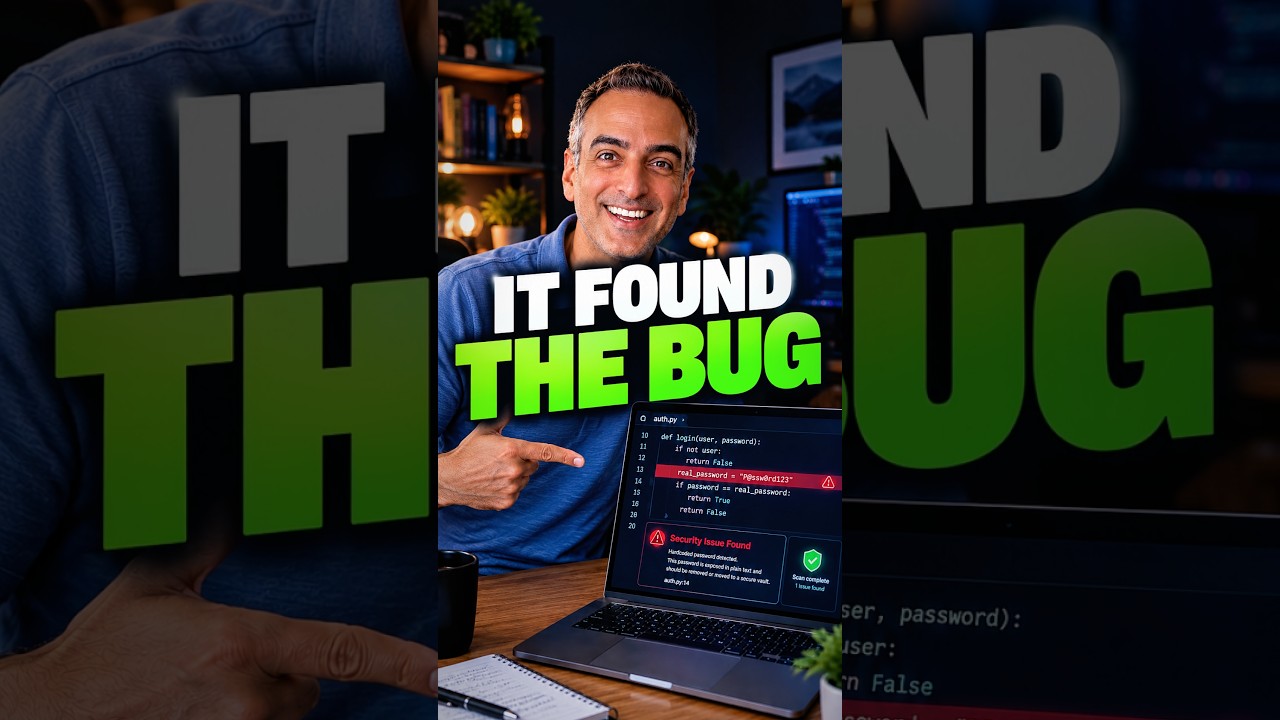
During a demonstration, a user intentionally introduced flaws into their codebase to test the tool's efficacy. As the video highlights, the tool successfully identified a major security breach: "he had a password that was just written in plain text."
From Terminal Noise to Readable Reports
Many traditional linting and security tools output results in a dense, text-heavy terminal format that is difficult for humans to parse quickly. This often leads to "alert fatigue," where developers ignore warnings because they are too hard to read.
Alibaba's tool solves this by transforming raw data into a visual format. The speaker notes that instead of just seeing "red and green on my screen," a user can fire off a single command to receive a "nice HTML report."
This makes it much easier to triage issues, allowing a developer to see exactly where a vulnerability lies and how it impacts the rest of the application.
Technical Deep Dive
To understand why this tool is necessary, we have to look at the rise of "vibe coding." This is a term used to describe a workflow where a developer provides high-level intent to an LLM (like Claude 3.5 Sonnet) and accepts the output based on whether the "vibe" or general logic feels correct, rather than performing a rigorous line-by-line audit.
While LLMs are excellent at syntax and logic, they are probabilistic, not deterministic. They don't "know" security; they predict the next most likely token based on their training data. If the training data contains insecure patterns, the AI will reproduce them.
Open-Code-Review likely utilizes a combination of Static Application Security Testing (SAST) and pattern matching. SAST tools analyze the source code without executing it, building an Abstract Syntax Tree (AST) to understand the flow of data.
By tracing how data moves through the application (taint analysis), the tool can see if a sensitive variable—like a user's password—is being passed into an insecure function or stored in a way that makes it accessible to unauthorized users. This provides a layer of deterministic verification that an LLM simply cannot offer.
Why This Matters
We are moving into an era where the bottleneck in software development is no longer how fast we can write code, but how fast we can verify it. As the video points out, if you are relying on an AI to "build it securely," you are essentially outsourcing your trust to a black box.
Using automated security tools is becoming "table stakes" for modern development. This means it is no longer an optional luxury for large enterprises, but a fundamental requirement for anyone shipping code, regardless of company size.
By integrating tools like Alibaba's Open-Code-Review into a CI/CD (Continuous Integration/Continuous Deployment) pipeline, developers can catch mistakes before they ever reach a production environment. This creates a safety net that allows for the speed of AI-assisted coding without the catastrophic risk of accidental data breaches.