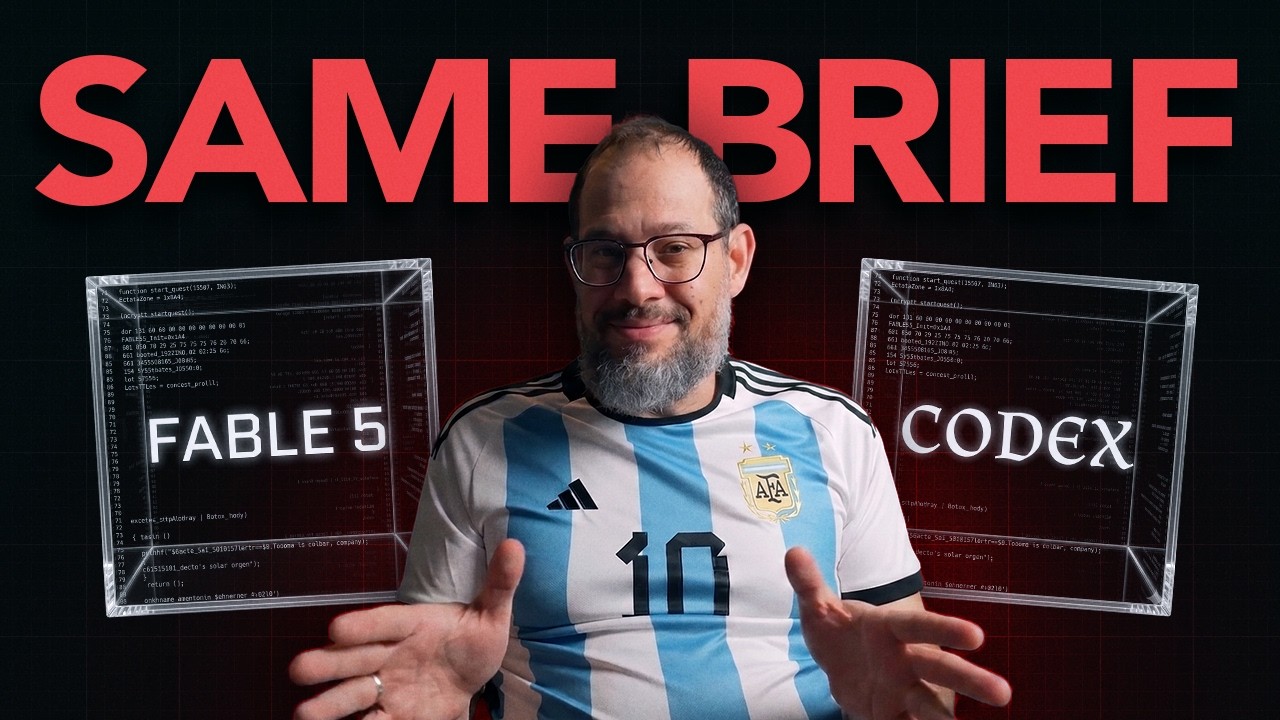
Ever wondered if an AI can spot the biggest automation opportunity in your business before you even ask?
The Simple Version
Think of a project as a house. Codex builds a single room perfectly; Fable scans the whole property and picks the room that adds the most value.
How It Actually Works
Agent Scale Changes the Workflow
When models grow, they can inspect inputs instead of just executing tasks.
Fable’s Pre‑flight Build
Fable first analyzes the business, then proposes a high‑leverage automation.
Codex’s Handoff Proof
Codex assumes a clear task and focuses on flawless execution.
Technical Deep Dive
Both agents used chain‑of‑thought reasoning, but Fable added a “problem‑scouting” layer.
This layer evaluates impact, effort, and strategic fit before selecting a target.
Implementation involved a lightweight classifier that scores each candidate automation idea.
Why This Matters
Letting AI choose the problem unlocks higher ROI automation.
It shifts the human role from task‑giver to strategy‑reviewer.
Businesses can now offload discovery work, focusing on the consequences that truly move the needle.
Key Takeaways
- Scale lets agents evaluate problems, not just solve them.
- Fable’s “pre‑flight” step finds higher‑leverage tasks.
- Codex defaults to safe, well‑defined execution.
- "Big model smell" appears when models over‑analyze without clear direction.
- Human judgment still decides which consequences matter most.
- Model routing now starts before the task is defined.
- This approach can reduce wasted automation effort by up to 40%.