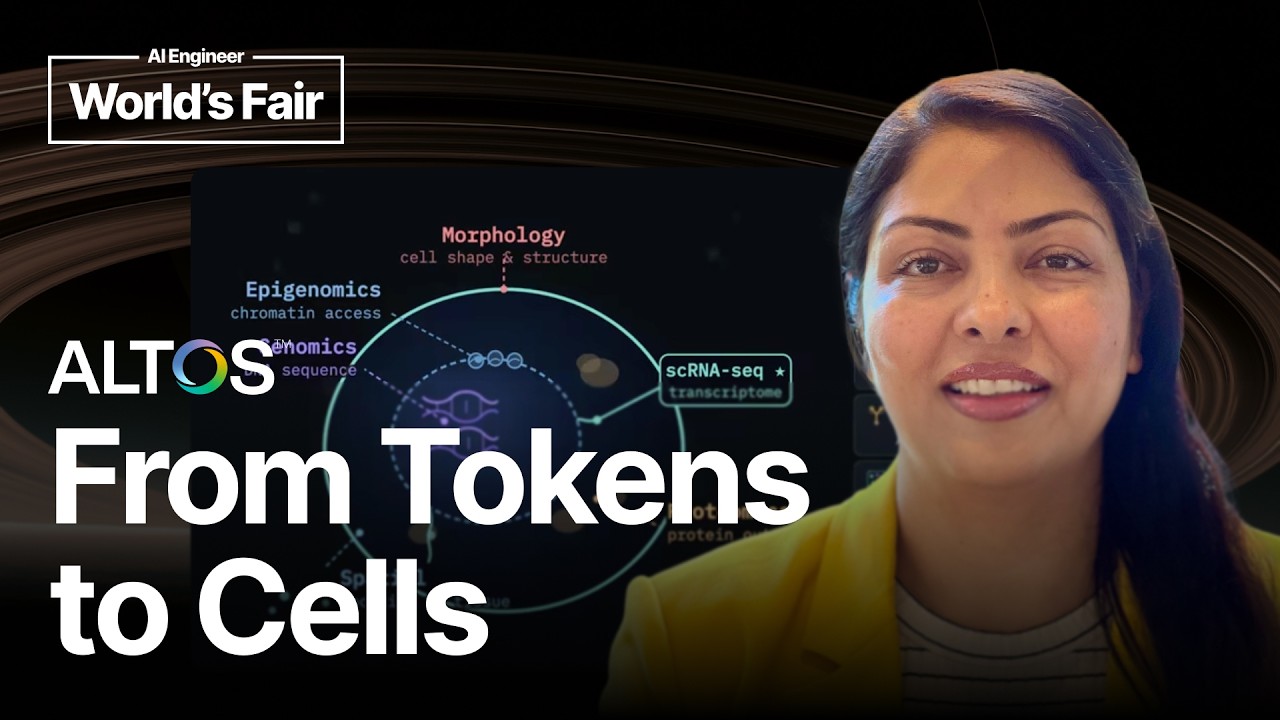
Ever wondered how AI can read the language of a single cell?
The Simple Version
Imagine a massive AI that has read billions of sentences. Here it reads billions of gene activity snapshots from single cells.
How It Actually Works
Tokenizing Biology
Scientists convert raw gene expression numbers into discrete “tokens” the model can ingest.
Model Architecture
A transformer backbone learns patterns across millions of cells, similar to how GPT learns grammar.
Technical Deep Dive
The pipeline starts with single‑cell RNA‑seq data, normalizes it, and maps each gene expression level to a token index.
Those tokens feed a pretrained foundation model that has already learned universal representations from text‑like data.
Fine‑tuning then aligns the model to predict cell types, trajectory states, or gene regulatory programs.
Architectural tricks such as positional embeddings for cell ordering and masked token prediction keep the learning stable.
Why This Matters
Foundation models for single‑cell biology could accelerate drug candidate screening by simulating how compounds affect cell pathways.
They also enable precision medicine, where treatments are tailored to the exact mix of cell states in a patient’s tissue.
Beyond biotech, the engineering lessons — data tokenization, massive pretraining, and domain‑specific fine‑tuning — are blueprints for any AI‑driven scientific discovery.
Key Takeaways
- Foundation models treat biological data as a language of tokens.
- Transformers provide the core architecture for learning cell‑level patterns.
- Tokenization bridges raw gene numbers to AI‑readable symbols.
- Fine‑tuning adapts generic AI to specific biological tasks.
- These models promise faster, cheaper drug discovery and personalized therapies.
- Engineering practices from NLP directly apply to biology.
- Scaling up data and model size unlocks deeper cellular insight.