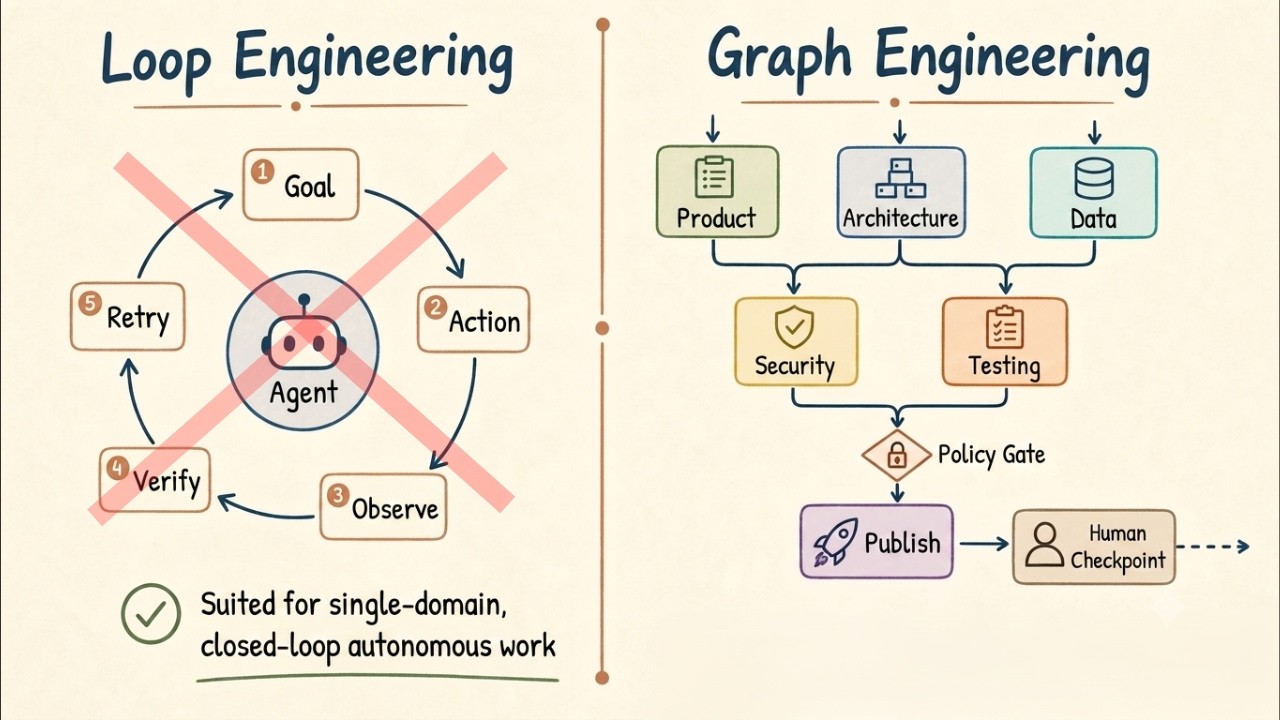
Ever wondered how AI systems can自动 orchestrate complex tasks without endless prompt tweaking? Graph engineering might be the answer.
⚡ TL;DR: Graph engineering designs the connections between AI processes, turning messy prompt chains into organized graphs for better performance.
The Simple Version
Think of AI workflows as a road map. Instead of a long list of steps, you draw lines that show how each step talks to the next.
How It Actually Works
Three‑Tier Engineering
First tier is prompts, second is loops, third is graphs. Each adds a layer of structure.
🎯 Think of it this way: It's like moving from handwritten letters to a structured spreadsheet.
What Makes Graph Unique?
Graphs let you see the whole workflow at once, spotting bottlenecks instantly.
Technical Deep Dive
Developers can define nodes and edges in JSON, then feed them to an LLM runner.
🎯 Think of it this way: It's similar to wiring a circuit board instead of stringing wires randomly.
Why This Matters
Better workflow design means faster AI agents, lower token usage, and more reliable outcomes.
Companies can scale AI tasks without hiring armies of prompt engineers.
Key Takeaways
- Graph engineering structures AI pipelines as interconnected nodes.
- It reduces manual prompt chaining.
- Three‑tier model: prompts → loops → graphs.
- Visual graphs reveal hidden bottlenecks.
- Saves compute and engineering time.