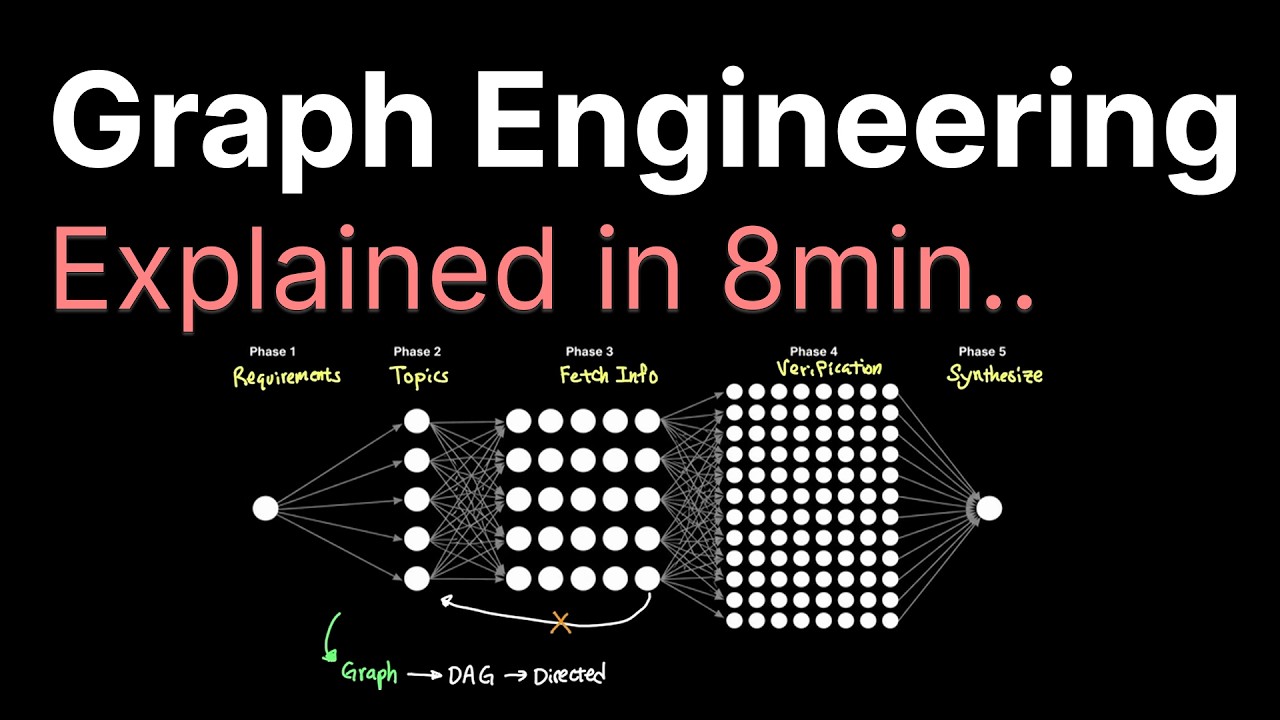
Ever wondered how AI agents can talk to each other like a well‑organized team? In just 8 minutes, Caleb breaks down the graph approach that’s reshaping scalable AI workflows.
The Simple Version
Think of a graph as a team of specialists, each node a role, and edges the hand‑offs that keep work flowing.
How It Actually Works
Graph Theory Basics
A graph is a collection of nodes (agents) connected by edges (tasks).
Dynamic Workflow
Workers can be added or removed on the fly, letting the system adapt to new jobs.
Cost of Graph
Maintaining connections costs compute, but modern tools reduce that overhead.
Technical Deep Dive
Tools like Claude Code, Codex CLI, and Antigravity give agents the ability to read, write, and modify code autonomously.
Previously, a node was brittle because it relied on fixed scripts; now AI can rewrite its own logic.
Scaling a graph means managing many agents, balancing load, and handling bottlenecks efficiently.
Why This Matters
Enterprises can now automate complex pipelines that once required dozens of engineers.
Graph‑based agents enable collaborative problem solving, reducing hand‑off errors and speeding delivery.
This shift opens doors to larger AI use cases, from data engineering to real‑time decision systems.
Key Takeaways
1. Graph Engineering makes AI agent collaboration scalable.
2. Modern coding assistants turn static nodes into flexible, self‑optimizing agents.
3. The approach reduces manual wiring and cuts development time.
4. Costs are shifting from hardware to orchestration and monitoring.
5. Early adopters can build end‑to‑end AI workflows with fewer moving parts.