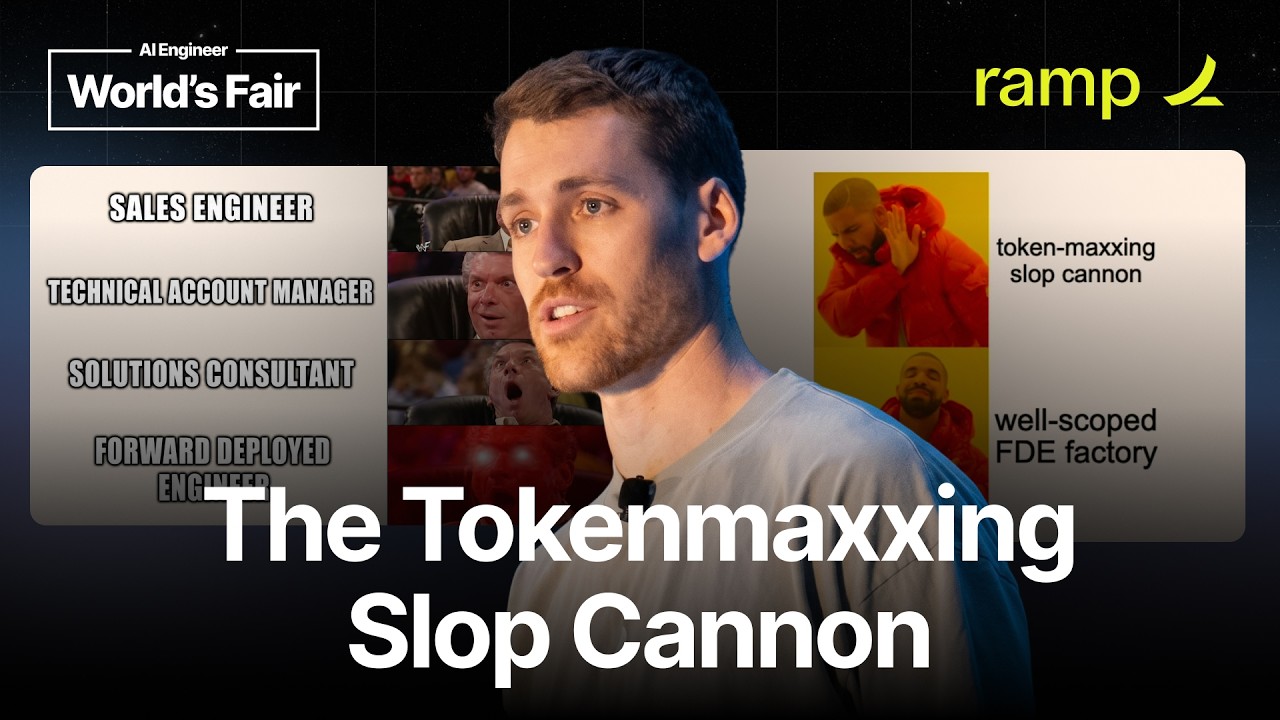
Imagine saying “yes” to every enterprise request that lands on your desk — then watching your team drown in work that never ships.
The Simple Version
Leo Mehr’s first principle is simple: don’t say yes until you’ve scoped the problem.
Think of it like a chef tasting a dish before adding salt — you need to know the flavor before you season.
How It Actually Works
Intake Automation
Requests flow in from sales, solutions engineers, and account managers.
Ramp hooked this step to an agent that lives inside Notion, turning raw asks into structured specs without manual copy‑pasting.
Agent Harness & Evaluation
The system includes an “agent harness” that runs each request through a set of rubrics.
Human feedback loops refine the agent’s output, and a library of past specs serves as grounding data.
Technical Deep Dive
Agent Architecture
Ramp built the spec agent as a lightweight LLM wrapper that consumes a Notion page as input and outputs a JSON spec.
The wrapper is orchestrated by a Python service that handles retries, logging, and versioned grounding documents.
Evals & Human Feedback
Evaluations use rubric‑based scoring that rates completeness, correctness, and format.
When scores dip, engineers intervene to correct the grounding data or adjust prompts.
Why This Matters
Enterprise sales teams often flood engineers with “quick wins” that look easy but end up being complex integrations.
By forcing a scoping pause, Ramp reduces wasted effort and keeps delivery pipelines flowing.
Combining human judgment with AI agents lets the team scale expertise, handling high‑volume intake while preserving quality.
Key Takeaways
- Scope before you ship – a “no” early saves weeks later.
- AI agents can ingest free‑form requests and output structured specs.
- Human‑in‑the‑loop rubrics keep agents honest.
- Grounding on past work improves consistency.
- The future FDE role blends judgment with automation.