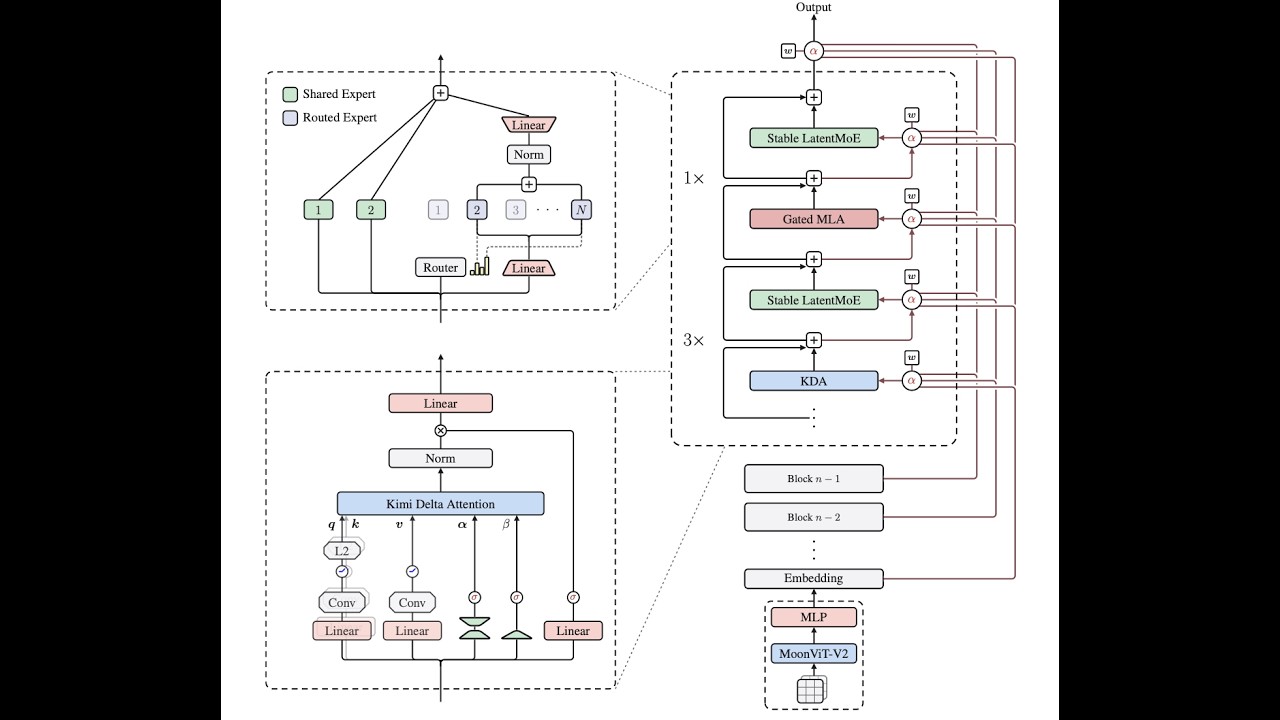
Curious about the next AI breakthrough? The Hugging Face crew just opened a journal club on Kimi K3.
The Simple Version
Think of Kimi K3 as a Swiss‑army knife for text and images. It can read, write, and see all at once.
How It Actually Works
Model Layout
It stacks a vision encoder with a language decoder, sharing weights to save memory.
Training Tricks
They use a mix of contrastive loss and next‑token prediction to fine‑tune performance.
Technical Deep Dive
Kimi K3 supports 8K token context, enabling long document reasoning.
Architecture uses a hybrid transformer with sparse attention to keep compute feasible.
Developers can apply LoRA adapters for efficient domain‑specific tuning.
Why This Matters
Multimodal models are becoming the backbone of AI agents that interact with the real world.
Kimi K3’s efficiency means smaller companies can build powerful assistants without massive GPUs.
Its open‑source release lets the community experiment and improve together.
Key Takeaways
- Kimi K3 combines vision and language in one model.
- It handles up to 8K tokens for deep reasoning.
- Training mixes contrastive and generative objectives.
- Efficient design allows LoRA fine‑tuning.
- Open release sparks community innovation.
- Smaller teams can now build multimodal apps.
- It sets a new baseline for context length.