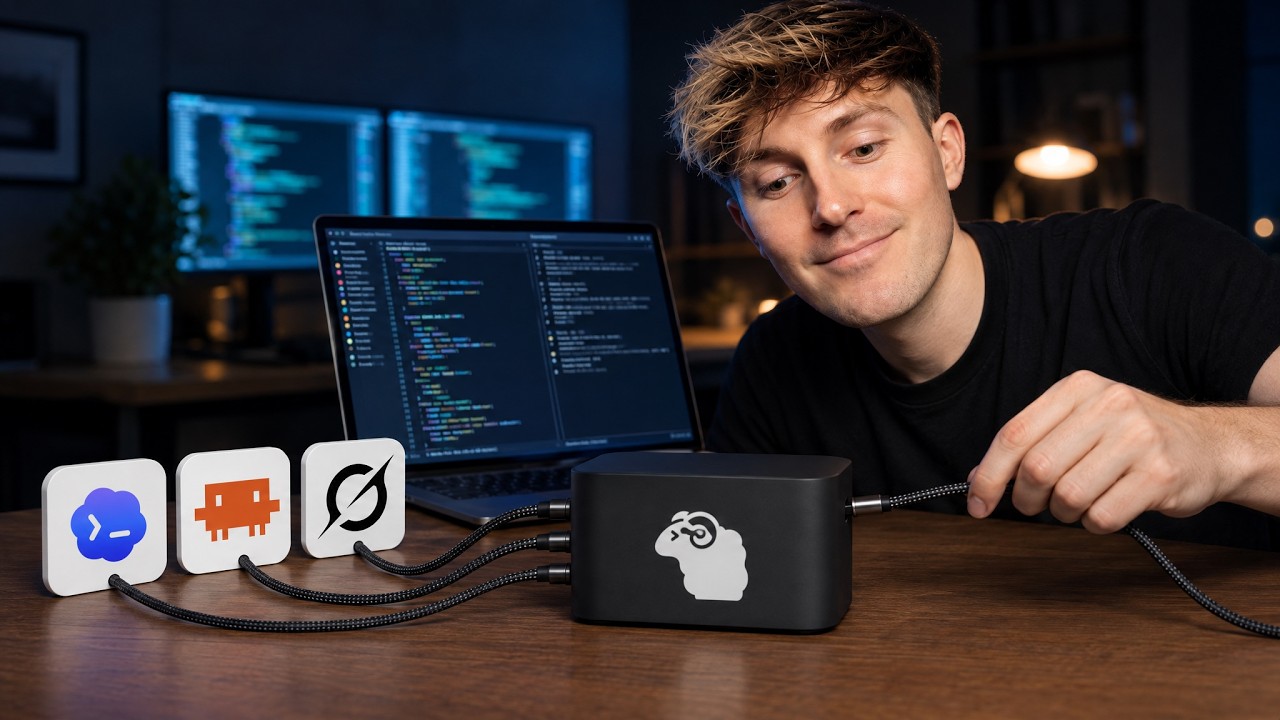
Stop treating your AI agents like isolated chatbots and start treating them like a professional engineering team.
The Simple Version
Imagine you are the manager of a software agency. Instead of doing all the coding yourself, you have a team of specialized experts—one for frontend, one for backend, and one for testing.
Herdr is essentially the office building where these experts live. It provides the space, the communication lines, and the organization needed to make sure these AI agents work together without you having to copy-paste code between ten different browser tabs.
How It Actually Works
Persistent Sessions and Spaces
One of the biggest pain points in AI coding is losing context. Herdr solves this by offering persistent sessions.
This means your agent remembers exactly where it left off in a specific project. You can organize these into spaces and tabs, allowing you to jump between different projects without resetting the AI's memory.
Agent Connectivity and Delegation
Herdr doesn't just host one AI; it connects multiple coding agents into a single ecosystem. You can link different models or specialized agents depending on the task at hand.
The Herdr Skill
The 'Herdr skill' is the secret sauce for agent delegation. It allows you to tell one agent to assign a specific sub-task to another agent.
This reduces the mental load on the developer, as you move from writing every line of code to orchestrating high-level goals.
Technical Deep Dive
For the power users, Herdr is built to live inside a high-performance terminal environment. The recommended stack involves Ghostty for the terminal emulator due to its speed and rendering capabilities.
Configuration is handled via a config.toml file. This allows developers to precisely tune colors, spacing, and keyboard shortcuts to minimize friction during the coding process.
To maximize the efficiency of a multi-agent setup, the workflow integrates several 'force-multiplier' tools:
- Neovim: Used for rapid file inspection and lightweight editing without leaving the terminal.
- Lazygit: A terminal UI for git that allows the developer to quickly review the changes agents have made.
- zoxide: A smarter
cdcommand that uses a database to jump to frequently used folders instantly. - Glaido: A dictation tool that allows you to control Herdr and your agents using voice commands, removing the typing bottleneck.
Why This Matters
We are moving away from the era of 'Prompt Engineering' and entering the era of 'Agent Orchestration.' The bottleneck is no longer the AI's ability to write code, but the human's ability to manage that code across multiple files and agents.
By using a dedicated environment like Herdr, developers can scale their output. You stop being the person writing the functions and start being the architect reviewing the pull requests.
Key Takeaways
- Herdr acts as a mission control center for multiple AI coding agents.
- Persistent sessions eliminate the need to repeatedly provide context to the AI.
- Agent delegation allows tasks to be passed between specialized AI models.
- Terminal integration (Ghostty, Neovim, Lazygit) is critical for professional-grade AI workflows.
- Configuration via
config.tomlensures the environment is optimized for the individual developer's speed. - Voice control via tools like Glaido can further accelerate the interaction loop with agents.