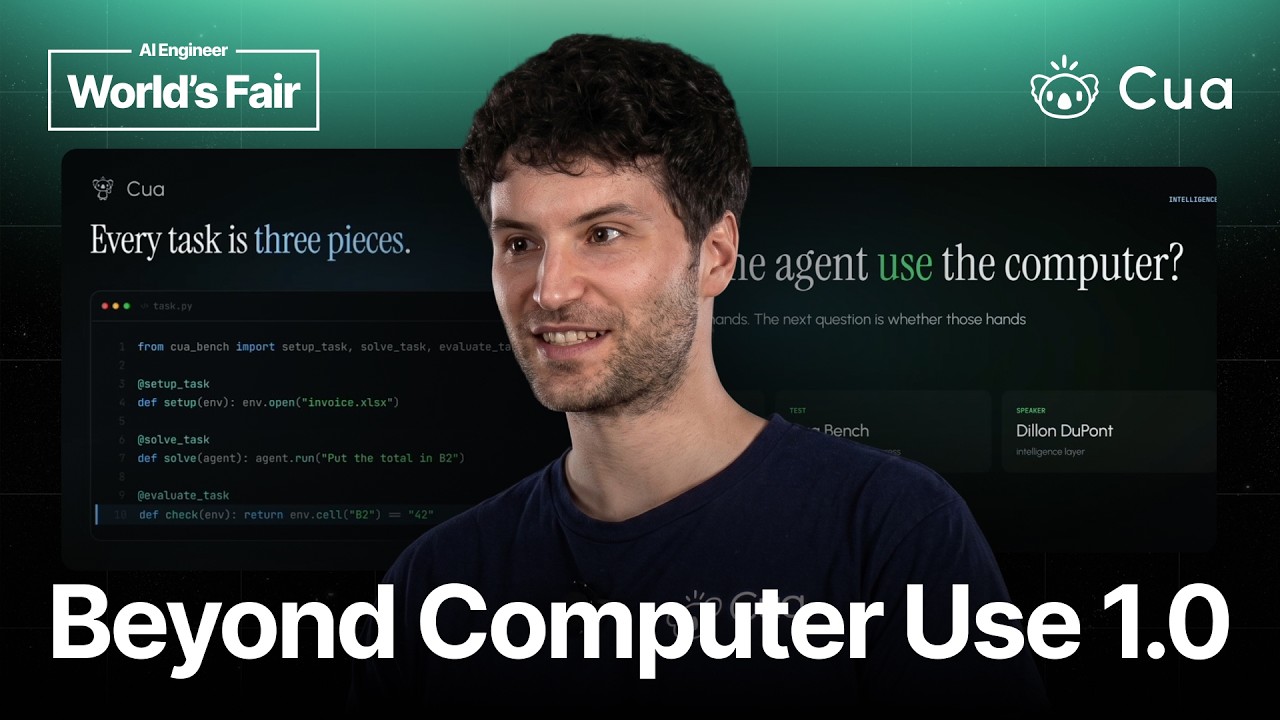
Three AI agents can now click, type, and scroll across multiple apps at once—without ever moving your physical mouse.
The Simple Version
Think of each agent as a remote control that talks directly to an app’s hidden UI language instead of fighting over the visible cursor.
How It Actually Works
Accessibility APIs
Instead of grabbing the hardware cursor, cua driver hooks into UI Automation on Windows, AT‑SPI on Linux, and AX on macOS—undocumented accessibility layers that let clicks land on background windows.
Multi‑Agent Coordination
Because each agent talks directly to the OS, they can run side‑by‑side without stealing focus from each other or from you.
Technical Deep Dive
cua driver replaces the standard screen‑wide observation with a per‑window view, cutting token usage by 34% on the 4K benchmark.
The system leverages Snorkel AI to generate training data, then fine‑tunes models on real circuit‑design software to test robustness.
Architecturally, it injects a lightweight server that translates agent actions into OS‑level accessibility events, preserving focus semantics.
Why This Matters
Multi‑agent desktop control opens the door to fully autonomous workflows, where a swarm of AI assistants can manage complex tasks across tools.
Improved token efficiency means cheaper, faster deployments for enterprises that need to orchestrate many agents simultaneously.
Early results show even strong models struggle on specialist domains, highlighting the need for better benchmarks and domain‑specific training.
Key Takeaways
- Agents can interact with apps via OS accessibility APIs, avoiding cursor contention.
- cua driver achieves an 80% pass rate on a 4K benchmark while using 34% fewer tokens.
- Swapping to cua driver reduces token consumption by focusing on a single window.
- Real‑world tests on circuit‑design software reveal a steep drop in performance for specialized tasks.
- CUABench provides a rigorous, verifiable benchmark suite for multi‑agent computer use.
- The approach enables true multi‑agent collaboration without focus stealing.
- Future work must address domain‑specific robustness and trustworthiness.