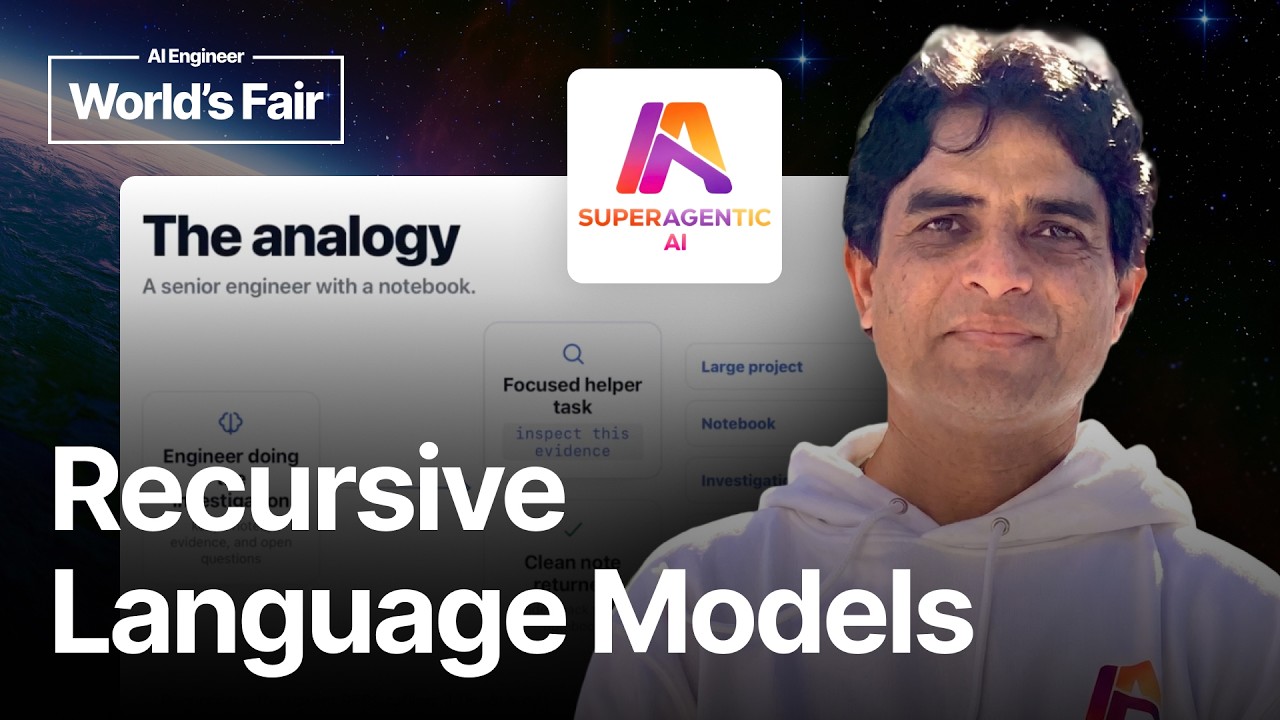
Ever feel like your AI coding sidekick drowns in a sea of files?
The Simple Version
RLM treats a huge repository like a treasure map. The model asks itself, “What do I need to know next?” and sends a tiny query to find the answer.
How It Actually Works
Recursive Query Loop
The model loads the repo into a programmable REPL. It writes a small script that calls llm_query to get a precise answer, then uses that answer to decide the next query.
Programmable REPL
The REPL acts as a sandbox where the model can execute its own code, inspect variables, and hand off control back to the LLM.
Technical Deep Dive
RLM builds on a MIT research pattern that treats the LLM as both planner and executor. Each llm_query call returns a snippet of code or a file read, which the model parses to formulate the next question. By limiting each step to a narrow sub‑question, the context stays small and the model avoids the “context explosion” that plagues standard agents.
Architecturally, the system consists of three layers: (1) a language model backend, (2) a query engine that translates LLM output into executable commands, and (3) a feedback loop that updates the query set. The demo runs on both a 7B local model and a cloud‑hosted 70B model, showing that recursion works regardless of compute size.
Why This Matters
Large enterprises spend weeks just trying to onboard AI agents to new codebases. RLM promises to cut that time dramatically by letting a single agent autonomously navigate, modify, and test thousands of files without human hand‑holding.
From a product perspective, this could enable true “self‑debugging” services, where an AI not only suggests fixes but also implements them, validates results, and iterates until the bug is gone.
Key Takeaways
- RLM uses recursive
llm_querycalls to keep context tight. - The model writes its own inspection code inside a sandboxed REPL.
- It works on both small local models and large cloud models.
- Real‑world demos show end‑to‑end execution on full codebases.
- Potential to automate debugging, refactoring, and feature generation.
- Reduces reliance on massive prompt contexts and expensive token usage.
- Open‑source “RLM Code” library lets developers experiment today.