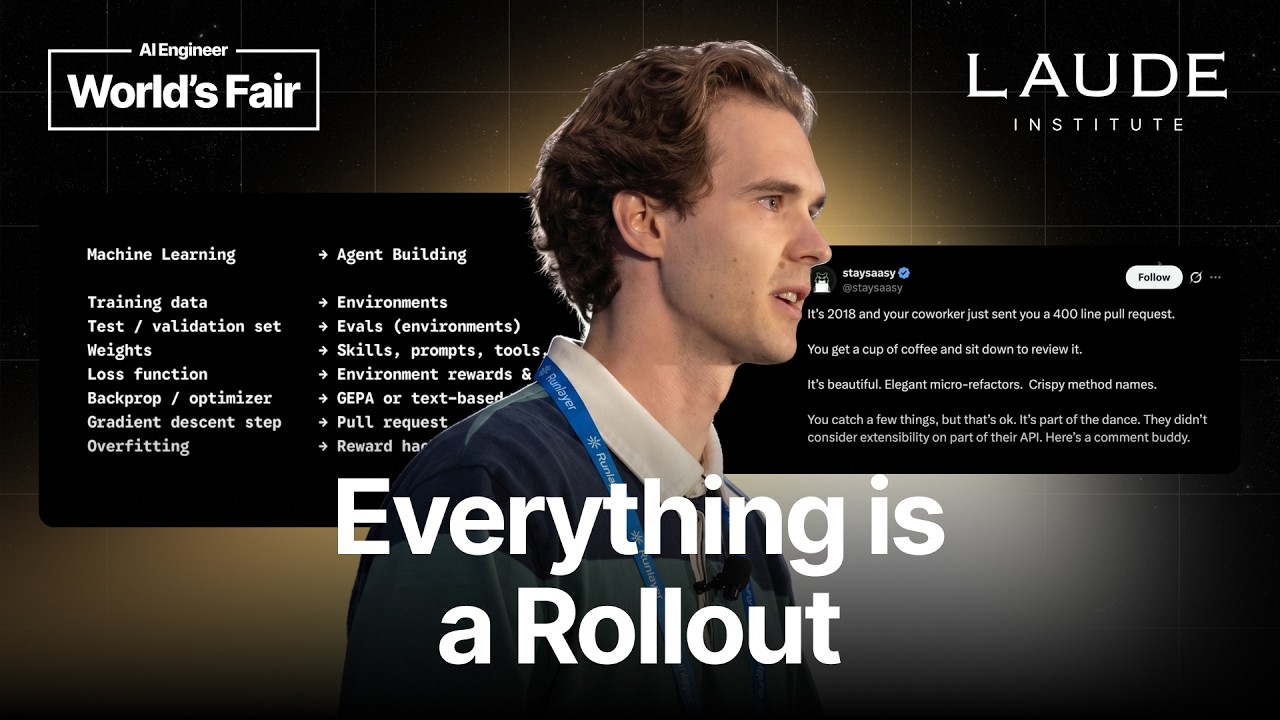
Testing AI agents can feel like debugging a black box — until now.
The Simple Version
Think of an AI agent as a robot that needs practice before it can solve real tasks.
How It Actually Works
Sandboxed Rollouts
Agents run in isolated environments called sandboxes.
Each run, or rollout, records actions and outcomes.
Evaluation Metrics
Metrics such as success rate, safety, and efficiency are logged.
These numbers guide the next iteration.
Optimization Loop
Data from rollouts feeds a learning loop.
Models are updated to perform better on the next set of runs.
Technical Deep Dive
Harbor provides a Python SDK that wraps the sandbox engine.
You define tasks, set up metrics, and launch parallel rollouts.
The framework stores trajectories as JSON logs for downstream analysis.
Integration with Terminal‑Bench lets you benchmark against baselines automatically.
Why This Matters
Rollout‑centric evaluation turns vague intuition into measurable progress.
Teams can iterate faster, reduce costly failures, and ensure safety before deployment.
OpenThoughts‑Agent shows that large‑scale rollouts can generate high‑quality training data at scale.
For enterprises, this means lower R&D spend and more reliable AI products.
For researchers, it opens a pathway to systematically explore agent behaviors.
Key Takeaways
- Rollouts create repeatable, measurable experiments for AI agents.
- Harbor simplifies sandbox creation and metric collection.
- Terminal‑Bench integrates benchmarking into the rollout loop.
- Optimization uses logged trajectories to refine models.
- OpenThoughts‑Agent demonstrates data‑efficient learning from massive rollouts.
- This approach bridges research and production for safer AI.
- Adopting rollout frameworks can cut development cycles dramatically.