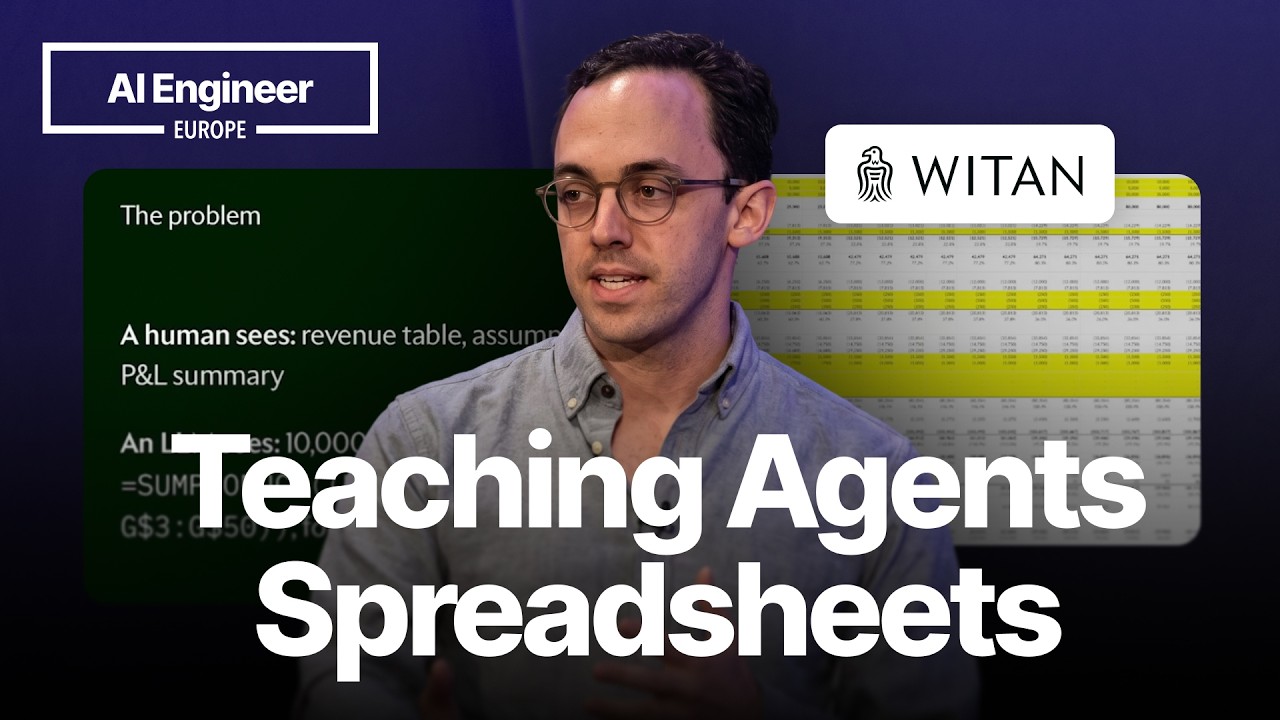
Imagine giving a spreadsheet a command like “Add 10% to all sales numbers” and watching it obey instantly.
The Simple Version
Think of a spreadsheet as a tiny city. The AI agent is a friendly tour guide that knows every street and can rearrange traffic signs on command.
How It Actually Works
Agent Architecture
It combines a language model for understanding text with a program generator that outputs spreadsheet formulas or Python scripts.
Execution Loop
The generated code runs inside a sandbox, checks results, and loops until the output matches the goal.
Technical Deep Dive
Witan Labs builds the agent on top of a GPT‑style transformer, fine‑tuned on spreadsheet datasets. The output layer maps tokens to OpenAPI‑style spreadsheet commands, then feeds them to a runtime that mimics Excel’s calculation engine.
Why This Matters
Manual spreadsheet work eats up hours for analysts and developers alike. An AI agent that can interpret natural language cuts that time dramatically, letting teams focus on insights instead of formulas.
Early demos show error rates drop by 30% compared to traditional macro recording, making the tool both faster and more reliable.
Key Takeaways
- AI agents can turn plain English into spreadsheet actions.
- They rely on a language model plus a program‑generation pipeline.
- Execution happens in a secure sandbox with feedback loops.
- Performance gains come from reduced manual coding.
- The approach works for both formulas and Python‑based manipulations.
- It opens doors for natural‑language data‑wrangling.
- Developers can integrate the agent into existing workflows via APIs.