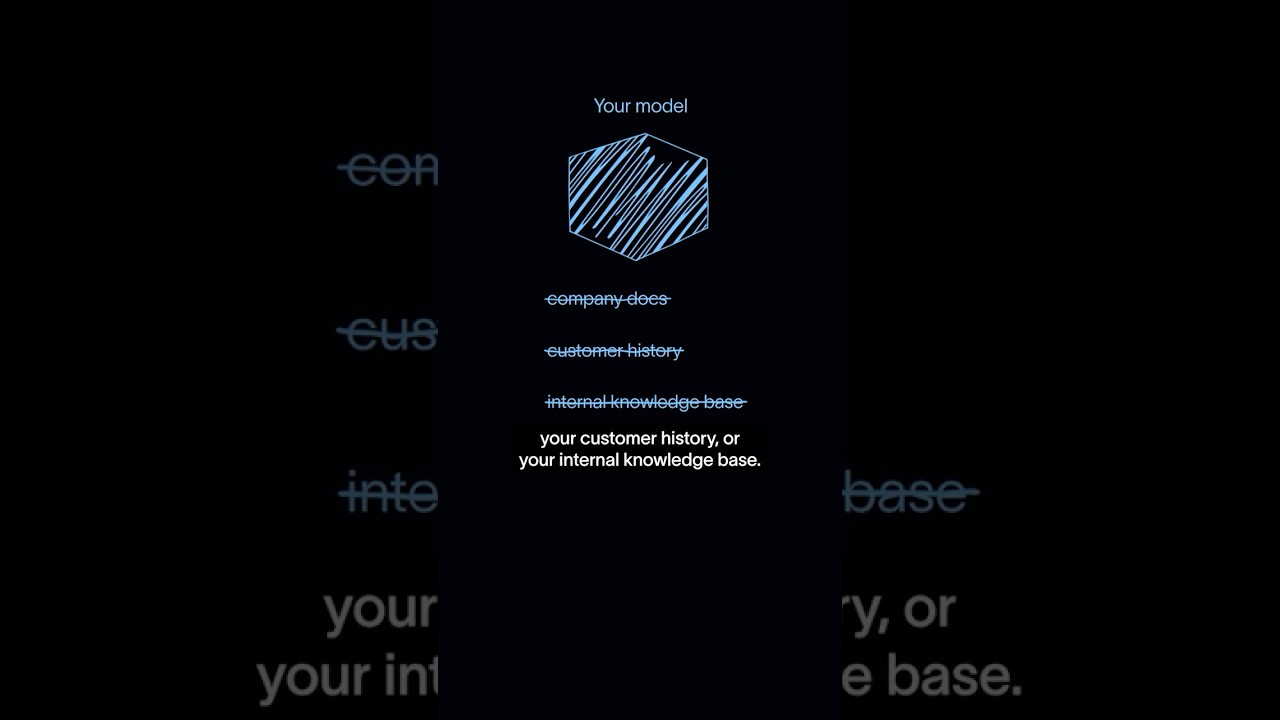
Hook: Imagine an AI that can look up the latest company policy before answering a question.
The Simple Version
Think of a model as a student who can’t remember every textbook. When the teacher asks a question, the student pulls the right chapter from a library and reads it before answering.
How It Actually Works
Retrieving Relevant Docs
The system turns your query into a vector and searches a vector store for the most similar chunks.
Injecting Context
The retrieved chunks are appended to the prompt right before the model generates its response.
Generating the Answer
The model reads the augmented prompt and produces an answer grounded in the retrieved info.
Technical Deep Dive
LangChain’s Retriever interface abstracts the search step, letting you swap between dense vector search, BM25, or hybrid methods.
Embedding models convert text to vectors; similarity is measured with cosine distance.
Chains like RetrievalQA or RetrievalQAWithSources manage the full flow from retrieval to generation.
Why This Matters
RAG lets enterprises keep their proprietary knowledge private while still using powerful LLMs.
It reduces hallucinations by grounding answers in actual documents.
Costs stay lower because you don’t need to retrain the model for every new data source.
Key Takeaways
- RAG = open‑book test for LLMs.
- Retrieves relevant docs on demand.
- Injects them into the prompt before generation.
- Uses vector stores and similarity search.
- Reduces hallucinations and keeps data private.
- Easy to swap components with LangChain.