Imagine building a game by simply describing what you want, and an AI stitches together the right pieces for you.
The Simple Version
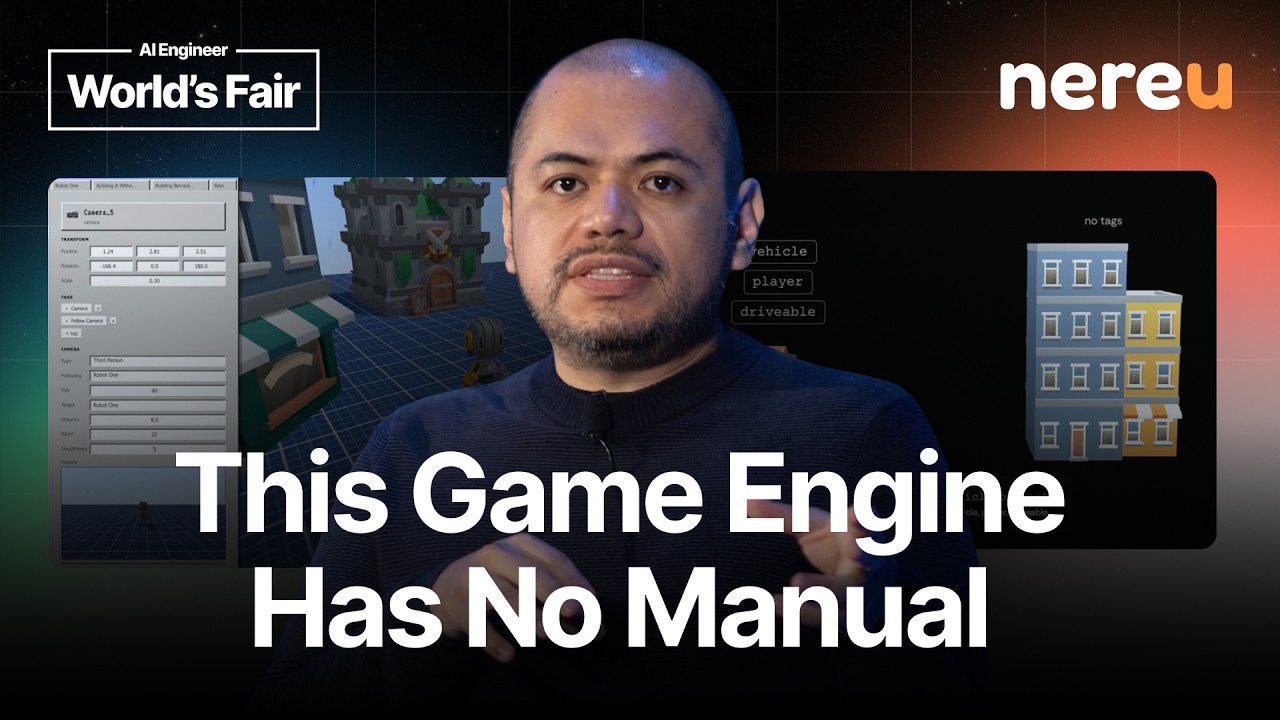
Think of the engine as a toolbox where every object is a piece you can tag with intent like “character” or “drivable”. The AI reads those tags and assembles the needed systems automatically.
How It Actually Works
Context Assembly
The AI only sends the parts of the scene that are near the editor’s focus, packing full tag data for nearby assets and collapsing distant ones to a simple type.
Tag‑Driven Systems
Systems query entities by the tags you attach, so a “vehicle” tag can trigger movement logic for any object marked drivable.
Technical Deep Dive
Nunez borrows rendering‑level of detail to prune the prompt, sending only necessary tag values to the model.
He uses an Entity Component System where tags replace traditional component lists, letting the AI resolve movement, animation, and physics on demand.
The prompt’s context is built from a hybrid of full‑scene tags for nearby objects and placeholder types for the rest, keeping token usage low.
Why This Matters
Game developers can skip writing repetitive boilerplate code for each character, focusing instead on creative intent.
AI‑assisted prototyping shortens iteration cycles, letting designers test wild ideas like making a building drivable in seconds.
This approach also opens the door to world models that understand scene structure, not just raw pixels.
Key Takeaways
- Tagging assets with intent replaces manual component wiring.
- Level‑of‑detail context keeps AI prompts efficient.
- ECS‑style tag queries enable flexible system composition.
- AI can generate or modify game logic on the fly.
- Rapid prototyping reduces repetitive coding overhead.
- Designers can experiment with unconventional gameplay mashups.
- Future tools may blend world models with traditional engines.