Imagine a world where video isn’t a finished file but a live playground you can steer in real time — just like GPS changed navigation forever.
The Simple Version
Think of video like a map you consult after the fact. With real-time video you see where you are and can change direction instantly, just as GPS lets you reroute on the fly.
How It Actually Works
Infinite, Interactive Generation
The system streams pixels continuously, so each frame can be altered by your prompt before the next frame arrives.
Stateful Sessions
Every interaction must store what happened, such as a character looking away, so the next prompt can react consistently.
Sub-100 ms Latency
Latency under one hundred milliseconds forces models to run on GPUs placed close to users, not in a distant data center.
Technical Deep Dive
Batch processing assumes you send a request, wait for a file, and then stop. Real-time video flips this: you stream pixels, keep session state, and expect the model to respond in milliseconds.
Because each frame depends on prior context, the architecture must maintain hidden states across calls, similar to how chatbots keep conversation history.
Edge placement means deploying inference close to the user, reducing round-trip time and enabling the sub-100 ms target.
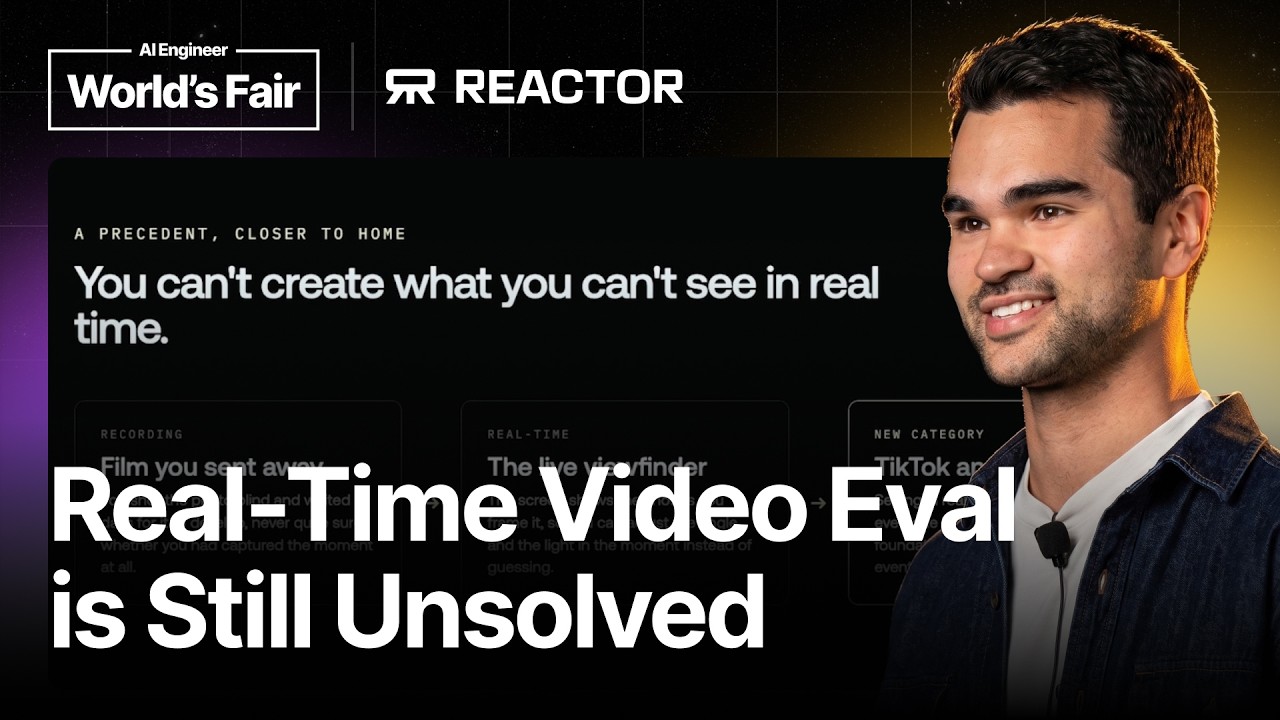
Evaluation remains open — measuring quality of an ever-changing stream is harder than rating a static video file.
Why This Matters
Control becomes instant feedback, the ultimate form of user influence, which can reshape advertising, gaming, and training.
Controllable worlds can feed robotics simulations with rich, varied data, accelerating learning without costly real-world trials.
Live avatars promise presence in virtual meetings, but they still struggle with consistency and realism.
If the infrastructure works, education could let students experiment with historical scenes or scientific phenomena in real time, making learning deeply interactive.
Key Takeaways
- Real-time video treats the medium as programmable, not just consumable.
- It requires stateful streaming and sub-100 ms latency.
- Edge GPUs are essential to meet performance demands.
- Batch workflows do not translate to this new paradigm.
- Control, infinite worlds, and live avatars are the three unlocks.
- Evaluation methods are still being invented.
- The shift could revolutionize AI-driven content creation.