Ever wonder why AI models stumble on complex reasoning, even when they’ve got the facts?
The Simple Version
Think of a Transformer as a student who studies facts but loses the connections between them.
How It Actually Works
Representation Drift
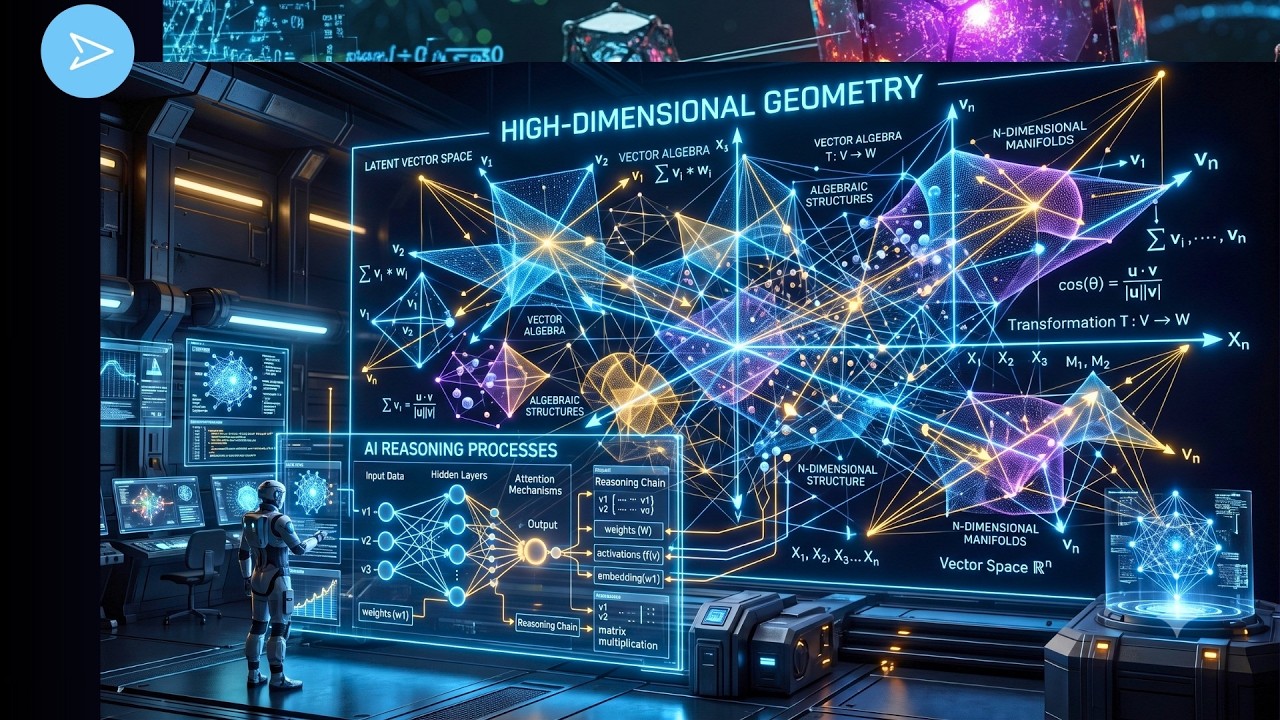
When a model processes many steps, its internal vectors shift away from the geometry expected by later layers.
Embedding‑Alignment Fix
DiscoLoop forces the hidden state to stay aligned with a discrete embedding space, resetting the geometry each hop.
Technical Deep Dive
The paper introduces looping discrete embeddings combined with continuous hidden states.
Causal experiments isolate the mismatch between embeddings and expected geometry in recurrent Transformers.
Alignment loss encourages the hidden state to match the target embedding distribution, stabilizing multi‑hop chains.
Why This Matters
Better reasoning enables AI to handle longer plans, complex puzzles, and out‑of‑distribution tasks without costly retraining.
This insight could reshape how we build next‑generation LLMs that truly “think” step‑by‑step.
Key Takeaways
- Transformers fail due to geometry drift, not memory loss.
- DiscoLoop introduces looping embeddings to preserve geometric consistency.
- Simple alignment loss dramatically improves multi‑hop reasoning.
- Results hold on out‑of‑distribution benchmarks.
- Architectural insight is elegant and computationally efficient.
- Potential to unlock deeper AI cognition.