Imagine if your entire business relied on a brain that a stranger could switch off or change overnight. That is the hidden risk of relying solely on closed AI APIs.
The Simple Version
Most people use AI like a rental apartment. You can live there and use the amenities, but you can't knock down a wall or paint the kitchen neon green because you don't own the place.
Open models are like owning your own home. You have the keys, you can see the plumbing, and you can remodel every single room to fit your exact needs.
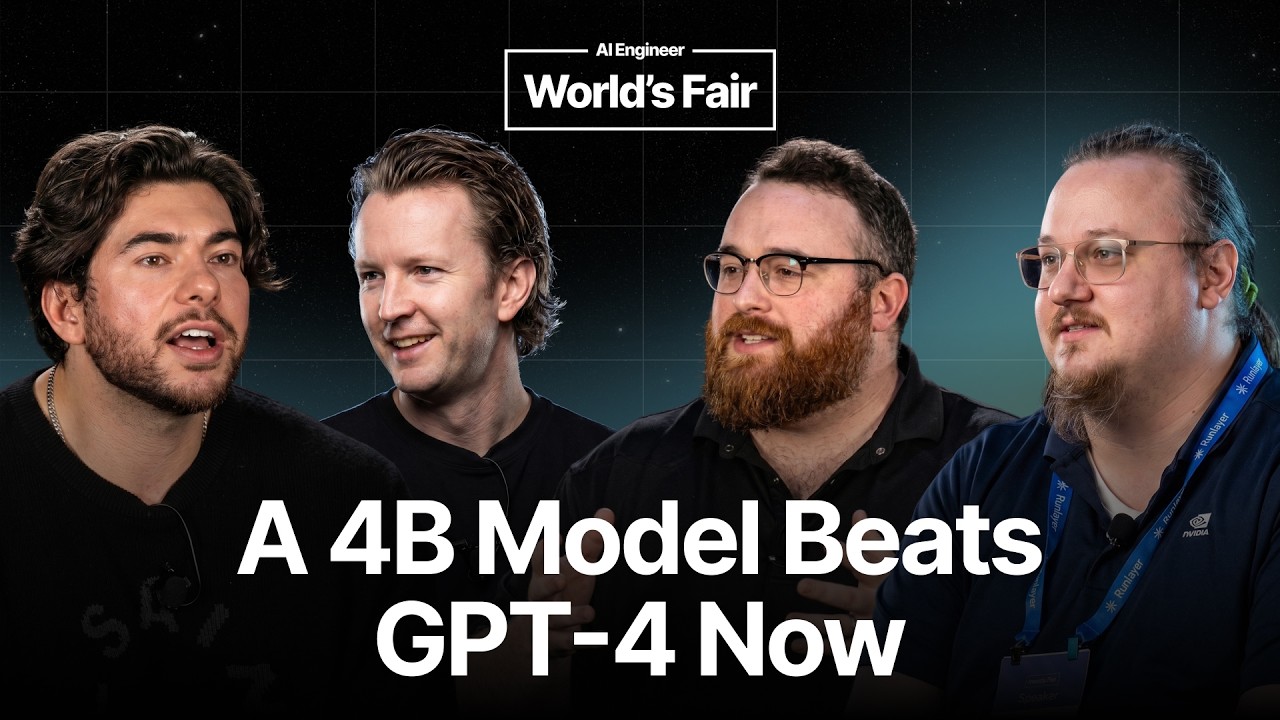
While closed models (like GPT-4 or Claude) are incredibly powerful, they are generalists. Open models allow you to take a smart base and turn it into a world-class expert in one specific field.
How It Actually Works
Trust is About Availability
In the enterprise world, trust isn't just about safety or ethics. It is about knowing that the model will be there tomorrow.
When you run a model locally, you aren't praying that a server in another country stays online. You have a directory of files you can inspect and code you can actually read.
The 'Mismanaged Genius' Problem
Frontier models are often 'mismanaged geniuses.' They are tuned to be decent at everything—from writing poetry to coding Python—which means they aren't perfectly optimal for any single task.
By using open weights, you can perform post-training. This strips away the unnecessary general knowledge and sharpens the model's focus on your specific business logic.
The Data Flywheel
When you use a closed API, the terms of service often stop you from using the AI's outputs to train future models.
Owning the model means you own the traces (the logs of what the AI did). This creates a flywheel: the model works, you collect the data, and you use that data to make the model even better.
Technical Deep Dive
For the devs, the real magic happens in the weights and licenses. The panel highlighted the importance of the Open MDW license, which explicitly gives permission to train on model outputs.
From an architectural standpoint, we are seeing a shift from 'frontier intelligence' to 'task-specific optimization.' For example, a specialized open model can automate finance workflows better than a massive model like Opus while costing less than a tiny model like Haiku.
The technical feat of pretraining a 400 billion parameter model in six months proves that the gap between open and closed is closing fast. We are moving toward a world where the 'harness' (the system around the model) and the model itself blend into a single, optimized unit.
Why This Matters
This shift moves the power from the provider to the builder. You no longer need a trillion-parameter giant to solve a specific business problem; you just need a well-tuned medium-sized model.
It also makes costs predictable. Instead of worrying about token pricing and API spikes, you manage your own compute, making your margins stable.
Ultimately, this leads to the 'Siri moment' for AI agents—where highly capable, specialized models run locally on your laptop, ensuring total privacy and instant response times.
Key Takeaways
- Trust = Availability: True trust means the model is an asset you own, not a service you rent.
- Specialization Wins: A tuned open model often beats a general frontier model on specific tasks.
- Own Your Traces: Owning the weights allows you to build a data flywheel for continuous improvement.
- Cost Efficiency: Local models eliminate unpredictable API costs and latency.
- The 'Mismanaged Genius': General models are jacks-of-all-trades; open weights let you build a master of one.
- License Matters: Look for licenses (like MDW) that allow you to legally train on outputs.